Due to fire, our power and phone lines are down. Please email us and we will get back to you as soon as we can. If you have an emergency you can call us at our temporary line, 818-438-6840
Home » News » The Minimalist Purist: The Ghost Wall
The Art of the Disappearing Threshold
For the Minimalist Purist, the ultimate architectural achievement is not what is added to a room, but what is removed. They seek a home that functions with a silent, hidden intelligence.
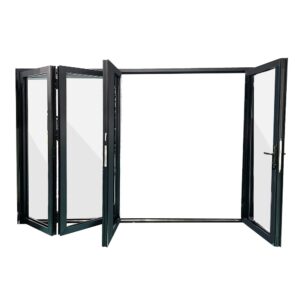
In the pursuit of a pure aesthetic, the “Minimalist” looks past the traditional sliding door—which leaves a footprint of stacked glass—and toward the Eris Sliding Pocket System.
Here, luxury is defined by the “Ghost Wall”: an expansive multi-panel span that, with a single motion, virtually disappears into the architecture.
The Luxury of the Empty Frame
In high-end modernism, visual noise is the enemy. A traditional sliding door, while functional, remains a constant presence; even when fully opened, the panels stack against each other, creating a vertical interruption in the sightline.
The Minimalist Purist requires a virtually unobstructed opening. The Eris Pocketing System is engineered to slide into a dedicated wall cavity, tucking the high-performance aluminum frames almost entirely out of view.
The result is a home that transitions from a sealed sanctuary to an open pavilion in one fluid, silent act.
The Invisible Track: Engineering the Floor Plane
A common friction point in standard sliding systems is the physical and visual “stumble hazard” of a raised bottom track.
The Minimalist Purist prioritizes a flush-mount transition to maintain the integrity of the design.
At Eris, our systems can be specified with a recessed track designed to sit flush with your interior hardwood or stone flooring.
By carrying the same material through the pocket threshold and onto the patio, we create a visual continuity that makes the glass wall feel like a temporary veil rather than a permanent boundary.
When the “Ghost Wall” is retracted, the eye moves across the floor plane without a rhythmic break.
The Sensory Bridge: The Weightless Reveal
Imagine a quiet April morning. In a standard home, opening a large-format glass door involves a heavy mechanical effort.
With an Eris system, the experience is nearly weightless. Our precision-balanced rollers are designed to carry substantial, high-performance glass panels with effortless grace.
As the door glides into its hidden pocket, the only sound is the subtle “hush” of the weather-stripping, followed by the immediate immersion of the spring breeze.
It is a transition that feels less like a door opening and more like the room itself beginning to breathe.
Precision Geometry: The Seamless Pocket
The “Ghost Wall” requires a master’s touch in structural framing. To achieve the Minimalist’s dream, the wall cavity must be engineered with surgical precision.
Our 75-Series aluminum profiles feature a slim-interlock silhouette, meaning that even expansive multi-panel configurations can tuck into a remarkably narrow wall space.
This allows the architect to maintain the structural depth of the home while concealing a massive expanse of glass within the literal bones of the building.
The Minimalist’s Comparison: Stacked vs. Pocketed
A design reference for the “Ghost Wall” aesthetic.
Feature
Stacked Sliding Doors
Eris Pocketing Systems
Visible Glass
33–50% Visible (Stacked)
Minimal to No Visible Panels (Pocketed)
Threshold Type
Standard Surface Track
Recessed Flush-Mount Option
Visual Footprint
Vertical “Glass Stack”
Clean, Uninterrupted Openings
Architectural Tone
Modern / Functional
Minimalist / Disappearing
Spatial Impact
Defines the Patio Edge
Dissolves the Patio Edge
Thermal Integrity in Hiding
A frequent concern for the Minimalist is whether a pocketed wall creates a thermal “weak point” where the door enters the cavity.
At Eris, we address this with advanced weather-sealing technology.
Even when the door is retracted, the pocket is engineered to help minimize air and debris infiltration into the home’s envelope.
The 75-Series Thermal Break remains a consistent barrier, ensuring that while the door may be invisible, its performance as a high-efficiency insulator remains intact when the system is closed.
The Eris Verdict
To the Minimalist Purist, the home is a gallery of light and space, and the pocket door is the ultimate curatorial tool.
An Eris Pocketing System is more than a door; it is an architectural vanishing act that prioritizes the horizon above all else.
It is a commitment to a lifestyle where the architecture serves the view, ensuring that every spring morning is greeted by a home that has truly lost its boundaries.
A sliding pocket door system is a glass door design where panels slide into a hidden wall cavity, completely disappearing from view to create a clean, open space without visible obstructions.
2. How is a pocket door different from a standard sliding door?
Unlike standard sliding doors that stack and remain visible, pocket doors retract fully into the wall, offering a seamless, uninterrupted opening and a more minimalist aesthetic.
3. What is a “Ghost Wall” in modern home design?
A “Ghost Wall” refers to a large glass wall system that disappears into the structure when opened, creating the illusion of no barrier between indoor and outdoor spaces.
4. Are sliding pocket doors energy efficient?
Yes, high-quality pocket door systems include thermal breaks and advanced weather sealing to maintain insulation, prevent heat transfer, and ensure energy efficiency when closed.
5. Can sliding pocket doors be installed with a flush floor track?
Yes, many modern systems offer recessed or flush-mounted tracks that align with flooring, eliminating step-ups and creating a smooth, continuous indoor-outdoor transition.