Due to fire, our power and phone lines are down. Please email us and we will get back to you as soon as we can. If you have an emergency you can call us at our temporary line, 818-438-6840
Coastal Living & Hurricane Season: Choosing the Right Aluminum Sliding Doors
admin
Home » News » Coastal Living & Hurricane Season: Choosing the Right Aluminum Sliding Doors
June marks the official arrival of summer gatherings, expansive ocean breezes, and the start of the Atlantic hurricane season.
For coastal homeowners, this time of year brings a unique architectural challenge: how to maximize stunning panoramic views and indoor-outdoor hosting flow while ensuring the property remains structurally prepared for severe weather.
Traditional patio doors often present a weak point against heavy tropical downpours and high winds. Transitioning to modern, precision-engineered coastal aluminum sliding doors allows you to protect your home without sacrificing natural light or summer design aesthetics.
This comprehensive guide answers critical consumer questions about balancing coastal luxury with weather readiness.
Essential Features of Hurricane-Resistant Sliding Doors
When evaluating coastal aluminum sliding doors for high-exposure zones, homeowners must look beyond aesthetics and verify independent technical certifications.
Thermally Broken Aluminum Construction: Aluminum naturally transfers heat. High-performance systems utilize a structural, low-conductive thermal break material inside the frame. This technology isolates the exterior heat, maintains cool indoor temperatures, and prevents frame condensation in high humidity.
Laminated Tempered Impact Glass: Standard glass shatters under cyclonic wind pressures. Impact-rated systems bond a resilient polymer interlayer between glass panes. Even if the outer glass cracks from an impact, the interlayer holds the pane intact to maintain the home’s structural envelope.
Marine-Grade Powder Coating: Salt air accelerates metal degradation. Premium frames feature factory powder coatings that pass rigorous AAMA (American Architectural Manufacturers Association) salt spray tests to ensure long-term scratch and corrosion resistance.
Multi-Point Locking Mechanisms: Single-latch sliders can fail under intense negative wind pressures. Heavy-duty multi-point locksets securely anchor the active door panels into multiple points along the jamb, strengthening the entire perimeter against forced entry and structural deflection.
Are Bifold Doors Better Than Sliding Doors in Coastal Zones?
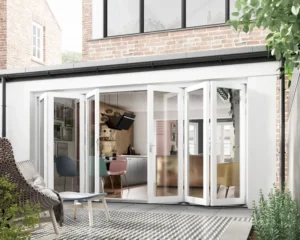
Choosing between a large-format slider and a bifold system depends on your architectural constraints, structural exposure, and weather management priorities:
Performance Feature
Coastal Aluminum Sliding Doors
Aluminum Bifold Folding Doors
Wind & Water Resistance
Excellent. Fewer vertical interlocking joints minimize potential air and water infiltration lanes during severe storms.
High. Employs complex perimeter seals but introduces more joint lines across wide spans, requiring deep overhang protection.
Visual Footprint
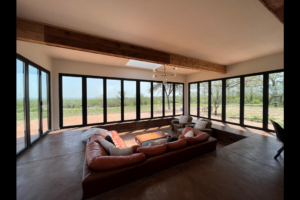
Panoramic. Large glass panels provide wide, unobstructed views of the coast even when fully closed.
Interrupted. Introduces vertical stiles every few feet, breaking up panoramic vistas when the system is closed.
Operation Type
Panels glide smoothly on inline tracks, requiring zero indoor or outdoor clearance space.
Panels fold and stack together, requiring a dedicated projection zone inside or outside.
Space Efficiency
Ideal for wind-exposed patios or balconies where usable floor space is strictly limited.
Replaces full walls to create wide-open spaces, best suited for shielded or covered lanais.
Critical Installation Considerations for Coastal Climates
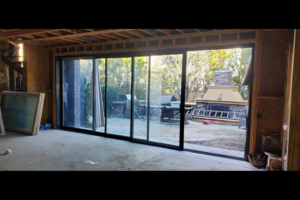
Because wide-span glass systems serve as structural barriers against intense tropical storms, professional integration is essential to achieve full performance ratings. Real-world contractor workflows focus on five critical steps:
Subfloor Threshold Waterproofing: The bottom track must be set over comprehensive flashing membranes and high-grade marine sealants to prevent driving rain from migrating underneath the threshold.
Drainage and Weep Hole Clearing: Coastal installations require continuous moisture management. Installers must verify that integrated track weep holes are perfectly clear of sand, concrete dust, or construction debris so water discharges outward immediately.
Structural Header Calibration: Large sliding systems require perfectly straight structural headers. If a header sags due to building settling, it places downward pressure on the panels, damaging the heavy-duty rollers and compromising the weather seals.
Plumb Track Alignment: Precision leveling is mandatory. Even a minor fraction of an inch out of alignment can cause uneven weatherstripping wear, leaving the door vulnerable to high-velocity wind leaks.
Corrosion-Isolated Fasteners: Installers must use high-grade stainless steel or coated fasteners to prevent galvanic corrosion when anchoring the aluminum frame into concrete block or wood studs.
The Eris Verdict: Engineering Built for the Coastal Home
Selecting the right patio doors for a coastal home requires balancing elegant architectural aesthetics with uncompromising structural safety. Standard doors often fail when subjected to the harsh realities of high wind loads, corrosive salt air, and heavy tropical downpours. By upgrading to premium aluminum sliding doors, you effectively secure your property without obstructing your panoramic ocean views.
Investing in high-performance aluminum systems not only safeguards your home during the volatile Atlantic hurricane season but also enhances your property’s daily energy efficiency and long-term resale value.
Explore Your Options
Ready to elevate your home’s design and storm readiness? Explore our engineering details on structural glass, or contact our experienced team today to discover our comprehensive Installation Services.
Follow us on Instagram @ErisHomeProducts to view real-world coastal installations, heavy-weather design ideas, and our latest 2026 product updates.
The best choice is a high-performance aluminum sliding door equipped with a thermally broken frame and an impact-resistant glass package. Coastal climates require corrosion-resistant frame finishes, like high-tier marine-grade powder coating, to withstand intense UV exposure, humidity, and airborne salt.
Are aluminum sliding doors hurricane-resistant?
Yes, specific engineered systems are designed to provide enhanced hurricane and impact resistance. When built with laminated tempered glass and multi-point locking systems, they can withstand severe wind loads and impact from flying debris. Homeowners in high-velocity hurricane zones (HVHZ) should verify Florida Building Code (FBC) compliance and Design Pressure (DP) ratings before purchasing.
Are high-performance aluminum sliding doors energy efficient in hot climates?
Yes. Modern systems feature built-in thermal breaks, double-tempered insulated glass, and low-emissivity (Low-E) coatings certified by the National Fenestration Rating Council (NFRC). These features block solar heat gain, earning Energy Star compliance and significantly reducing air conditioning loads.
Do aluminum sliding doors rust?
No, aluminum does not rust like iron or steel. However, raw aluminum can oxidize and blister when exposed to salt air. To prevent this, premium coastal doors utilize advanced factory-applied powder-coated aluminum finishes that isolate the metal from environmental corrosion.
How long do aluminum sliding doors last?
A professionally manufactured aluminum sliding door system has an average lifespan of 40 years. Unlike wood doors that warp and rot from tropical humidity, or vinyl doors that degrade and discolor under intense UV radiation, structurally stable aluminum maintains its performance over decades of exposure.