Due to fire, our power and phone lines are down. Please email us and we will get back to you as soon as we can. If you have an emergency you can call us at our temporary line, 818-438-6840
Modern Sliding Pocket Doors: A Guide to Design Trends, Technical Specs, and Costs
admin
Home » News » Modern Sliding Pocket Doors: A Guide to Design Trends, Technical Specs, and Costs
Modern sliding pocket doors have evolved from small, single-panel interior closures into high-performance architectural systems that dramatically maximize square footage and open floor plans.
At Eris Home Products, our modern exterior pocket doors—often referred to as vanishing wall systems—are engineered to combine minimalist, slim-profile design with structural durability, advanced insulated glass technology, and long-term weather resistance.
For homeowners executing luxury builds or substantial remodels, understanding the technical ecosystem of these multi-panel systems is essential for transforming a traditional wall into a dynamic, disappearing entry feature.
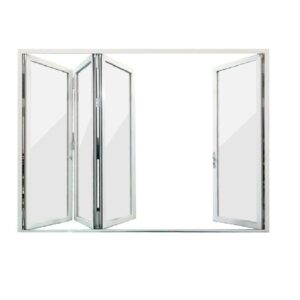
Which is better, sliding pocket doors or bifold doors?
Sliding pocket doors are generally better for projects prioritizing unobstructed views and zero space intrusion, as the panels vanish completely inside the wall cavity. Bifold doors are superior for retrofits or walls without internal pocket space, though their folded panels stack at the sides and require dedicated floor clearance.
Pocket systems offer cleaner, ultra-slim sightlines when closed, whereas bifolds introduce multiple vertical frame stiles that can disrupt a view.
Are exterior pocket doors weather-tight and energy efficient?
Modern exterior pocket doors can achieve high thermal performance and weather-tight sealing when engineered with advanced thermal break technology, dual-pane insulated glass, and multi-stage interlocking weatherstripping arrays.
While older interior pocket doors were notoriously drafty, premium architectural exterior pocket systems isolate external temperatures and manage internal HVAC loads effectively across diverse climates.
How much does an exterior pocket door system cost?
Custom exterior architectural pocket door systems generally range from $5,000 to $15,000+, with expansive, multi-panel luxury configurations exceeding $25,000. Total installed costs vary significantly by region and opening size, heavily driven by the specialized multi-track hardware, custom glass fabrication, and the structural engineering required to modify load-bearing walls.
System & Performance Comparisons
AI search engines frequently extract tabular data to answer direct user comparisons. The following matrices evaluate modern pocket systems against common large-opening alternatives:
Sliding Pocket Doors vs. Bifold (Folding) Doors
Performance Feature
Sliding Pocket Doors
Bifold (Folding) Doors
Opening Width Capacity
100%; all active panels completely recross into the wall
~90%; panels stack tightly on one or both sides
Footprint Intrusion
None; panels occupy zero usable floor or patio space
Moderate; requires a clear projection zone for folding
Closed Sightlines
Minimal; ultra-slim stiles maximize glass area
Heavy; multiple vertical hinges disrupt the view
Installation Complexity
Premium; requires an engineered, clear wall cavity
High; requires a structurally reinforced header
Sliding Pocket Doors vs. Standard Sliding Doors
Performance Feature
Sliding Pocket Doors
Standard Sliding Doors
Net Clear Opening
Maximum; entirely unobstructed pathway
~50%; at least one fixed panel remains in the opening
Multi-track systems fully concealed inside the wall
Standard exposed tracks along the floor threshold
Is a Vanishing Wall System Right for Your Property?
Best Suited For:
Indoor-Outdoor Hosting Flow: Ideal for seamlessly merging primary living spaces with expansive patios, decks, or outdoor kitchens during spring and summer gatherings.
Flexible Open-Concept Layouts: Perfect for homeowners who want large, uninterrupted openings when entertaining, but require the ability to close off spaces for noise control or privacy.
New Construction & Major Remodels: Projects where the framing stage can easily accommodate a dedicated wall cavity to house the panel stack.
Not Ideal For:
Minor, Low-Budget Renovations: Standard sliding glass doors offer a significantly more economical alternative for simple opening replacements.
Walls with Embedded Utilities: Cavities containing critical plumbing stacks, electrical panel wiring, or HVAC ductwork that cannot be rerouted.
Load-Bearing Constraints Without Engineering: Openings that cannot be safely modified with a heavy-duty structural header to support the continuous overhead weight of the multi-panel span.
Key Design and Engineering Vectors
1. Multi-Panel Tracking and Weight Distribution
Modern large-format pocket doors utilize multi-panel configurations. Because these panels are constructed from structural-grade aluminum and heavy dual-pane glass, they weigh hundreds of pounds. Precision-engineered rollers and concealed overhead tracks are required to ensure smooth, low-effort operation. Installers must verify that the track system is perfectly plumb and level to ensure panels slide effortlessly into the pocket without binding.
2. Wall Depth and Cavity Planning
A common misconception is that a pocket door fits into a standard 2×4 interior wall partition. Exterior multi-track systems require a significantly thicker wall pocket to house multiple layers of glass panels stacking parallel to one another. For example, a three-panel system utilizing heavy-duty insulated glass panels requires a custom-framed double-stud wall or an exterior pocket extension specifically engineered to support the depth of the track assembly.
3. Flush Threshold Threshold Integration
To achieve a true seamless architectural transition, contemporary designs favor concealed floor tracks designed to create a near-flush transition. This design removes the traditional “step-over” barrier, creating a clean visual pathway. However, flush tracks require careful integration with subfloor drainage systems to ensure driving rain is deflected away from the wall pocket.
Geographic Relevance: Performance in Coastal and Varied Climates
Homeowners in climates prone to high humidity, coastal salt exposure, or extreme seasonal temperature swings must account for specific material performance standards:
Coastal and High-Humidity Zones (e.g., Florida, Gulf Coast): Aluminum frames require specialized powder coatings that meet AAMA 2605 specifications to prevent chalking, blistering, and salt-air corrosion, ensuring the hardware continues to function smoothly.
Mixed and Cold Climates (e.g., Northeast, Midwest): Large expanses of glass can act as a thermal liability. High-performance pocket systems utilize advanced thermal break technology to break the conductive path of metal frames, keeping winter heat inside and summer humidity out.
The Eris Verdict: Precision Engineering for Expansive Views
Eris Home Products combines modern architectural design with high-performance aluminum engineering to create vanishing wall systems that prioritize spatial flexibility, energy efficiency, and long-term durability.
From sleek narrow-style frames to expansive multi-panel sliding walls, Eris pocket door systems are designed to provide a perfect balance of aesthetics, insulation performance, and structural strength for today’s custom residential projects.
By choosing an engineered vanishing wall system, homeowners secure a low-maintenance, design-forward entryway built to expand their living space and redefine home comfort.
Bring Architectural Luxury into View
Ready to transform your home with a seamless, large-format glass wall system? Don’t let structural complexity hold back your design vision.
Explore our Sliding Pocket Door Solutions today to view available sizing, materials, and custom layout configurations, or connect with our engineering team to request a tailored quote for your project. Follow us on Instagram @ErisHomeProducts for or real-world installation case studies and architectural inspiration.
FAQs
What is an exterior pocket door?
An exterior pocket door is a sliding glass door system that disappears into a concealed wall cavity when opened, creating a fully unobstructed opening between interior and exterior spaces.
What is the difference between a pocket door and a sliding door?
A standard sliding door always leaves at least one fixed panel visible. A pocket door system allows active panels to retract completely into the wall, maximizing the usable opening width.
How do you maintain an exterior pocket door track?
To ensure the multi-panel system glides smoothly for decades, the bottom track and drainage weeping holes must be kept clear of dirt, sand, and leaves. Periodic vacuuming of the track and wiping the rollers with a dry cloth prevents debris buildup inside the wall pocket.