Due to fire, our power and phone lines are down. Please email us and we will get back to you as soon as we can. If you have an emergency you can call us at our temporary line, 818-438-6840
Sliding Pocket Doors: A Smarter Way to Open Your Home for Memorial Day
admin
Home » News » Sliding Pocket Doors: A Smarter Way to Open Your Home for Memorial Day
As Memorial Day approaches, many homeowners begin thinking beyond seasonal décor and toward improvements that meaningfully change how their home functions—especially when preparing to host.
Late spring marks the beginning of the indoor-outdoor living season in much of the country, and this shift often brings renewed attention to how easily people can move between spaces.
One upgrade gaining momentum is the use of sliding pocket door systems to create wider, cleaner, and more flexible openings throughout the home.
Unlike traditional hinged doors or standard sliding panels, modern pocket systems allow entire walls to open and disappear into a concealed cavity.
This capability becomes particularly valuable during May and early summer, when gatherings move onto patios, decks, and outdoor kitchens, and homeowners want their interior spaces to feel more connected to the outdoors.
Why Sliding Pocket Doors Make Sense Heading Into Summer
As temperatures rise and hosting becomes more frequent, homeowners tend to prioritize four functional goals: improving flow, strengthening indoor-outdoor connections, increasing natural light, and reducing visual barriers.
Sliding pocket doors support all of these objectives, but their most significant advantage is not simply “saving space.” Their defining benefit is the ability to create large, uninterrupted openings that transform how a home feels and operates.
With systems such as those offered by Eris Home Products, multiple large-format panels can slide along a track and fully recess into a wall pocket.
This allows the opening to expand far beyond what a traditional door or even a standard sliding system can provide. The result is a cleaner, more expansive transition that supports both everyday living and seasonal entertaining.
What Actually Defines a Modern Pocket Door System
The term “pocket door” is often used loosely, but modern architectural pocket systems differ significantly from the small, single-panel interior pocket doors common in older homes. A true contemporary pocket system typically includes several defining features:
Large-format glass and aluminum panels designed for structural stability.
Multi-panel configurations that allow wide openings.
Concealed tracks and hardware for a clean, minimal appearance.
Total recession, where all active panels fully recess into a dedicated wall cavity.
These systems are engineered for exterior and transitional openings, not just for saving space in tight interior rooms.
Eris Home Products focuses specifically on larger architectural applications—living rooms, dining rooms, kitchens, and patio transitions—where the goal is to create a more flexible, open environment rather than simply reclaiming a few square feet.
A More Practical Alternative to Full Open-Concept Renovations
Over the past decade, many homeowners embraced the idea of removing walls entirely to create open-concept layouts.
Recently, however, there has been a shift toward more adaptable spaces. People want openness when entertaining, but they also want the ability to close off areas for privacy, noise control, or temperature management.
Sliding pocket doors offer a balanced solution, allowing homeowners to open spaces when desired and close them when separation is needed, without committing to a permanently open floor plan.
This flexibility is especially appealing in homes where structural walls cannot be removed or where homeowners want to maintain some architectural definition between rooms.
Comparing Large-Opening Systems
Feature
Sliding Pocket Doors
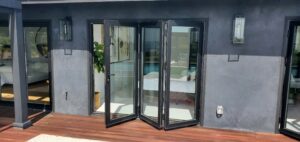
Bifold (Folding) Doors
Lift-and-Slide Systems
Space Saving
Best; panels vanish completely into the wall cavity.
Panels stack on one or both sides, requiring floor space.
Panels slide on top of one another, leaving part of the opening closed.
Efficiency
High thermal performance with advanced thermal breaks.
Can have slightly lower U-values due to more frames between glass panels.
Generally offer better insulation and heat retention than bifolds.
View
Maximized; zero obstructions when fully open.
Multiple vertical frames can disrupt the view when closed.
Minimal sightlines even in large configurations.
Where Sliding Pocket Doors Work Best
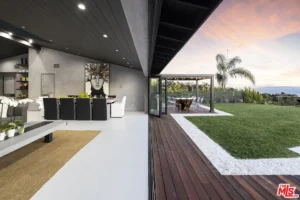
Living Room to Patio Transitions: This is the most common application. For Memorial Day gatherings, this expanded opening supports better circulation and a more inviting atmosphere.
Kitchen Adjacencies: Pocket systems can separate kitchens from dining areas to contain noise or cooking activity while allowing the spaces to open fully during social events.
New Builds or Major Renovations: Because pocket systems require space within the wall, they are most easily integrated during new construction or significant remodels.
The Eris Verdict: Performance Meets Flexible Design
For homeowners evaluating high-end architectural openings, the goal is to balance aesthetic openness with structural longevity.
Eris Home Products’ custom aluminum sliding and folding architectural systems are specifically engineered to bridge this gap.
By utilizing structural-grade aluminum and advanced thermal breaks, these systems meet strict national durability standards while providing the near-complete unobstructed openings modern designs demand.
Unlike mass-market options, these premium systems can feature European thermal struts that create a non-conductive bridge between the exterior and interior, enhancing energy efficiency in a variety of climates.
Whether you are designing a coastal retreat or an urban sanctuary, Eris provides the custom-configured panel systems necessary to transform a standard wall into a dynamic, disappearing entry feature.
Finalize Your Spring Home Upgrade
Ready to transform your home’s architectural flow in time for a season of seamless living? Request a quote and follow us on Instagram @ErisHomeProducts for 2026 design inspiration.
Sliding pocket doors are large glass door systems that slide into a concealed wall cavity, creating a wide, unobstructed opening between indoor and outdoor spaces.
2. How are sliding pocket doors different from standard sliding doors?
Unlike standard sliding doors that leave one panel fixed and visible, sliding pocket doors fully recess into the wall, maximizing the opening and creating a cleaner, more open appearance.
3. Are sliding pocket doors energy efficient?
Yes, modern sliding pocket door systems can include thermal breaks and insulated glass to improve energy efficiency and help maintain indoor comfort throughout the year.
4. Where do sliding pocket doors work best in a home?
Sliding pocket doors are ideal for living room-to-patio transitions, kitchen openings, outdoor entertainment areas, and large modern renovation projects.
5. Are sliding pocket doors suitable for entertaining spaces?
Yes, sliding pocket doors create seamless indoor-outdoor flow, improve guest movement, and make entertaining spaces feel larger and more connected.