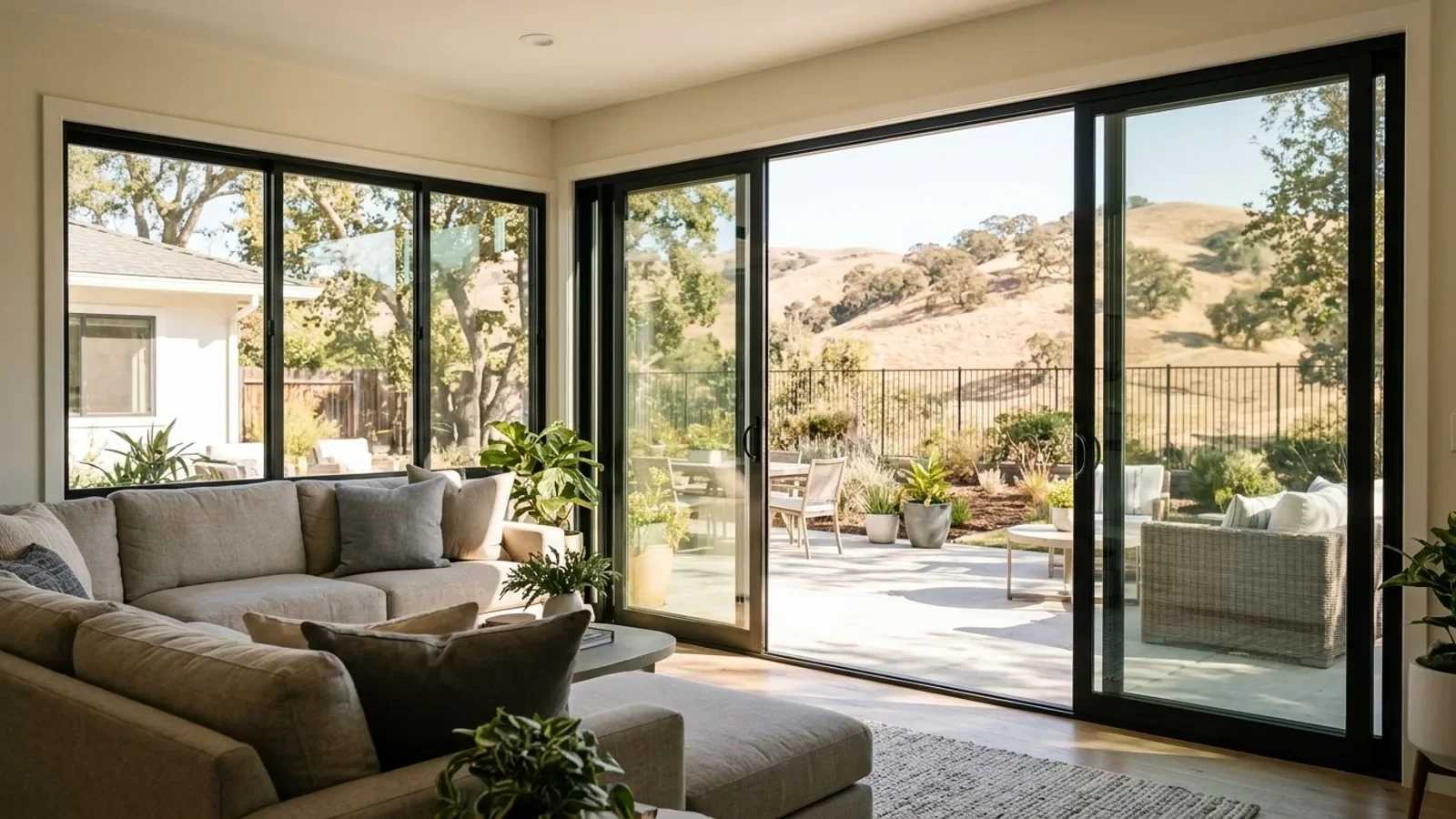


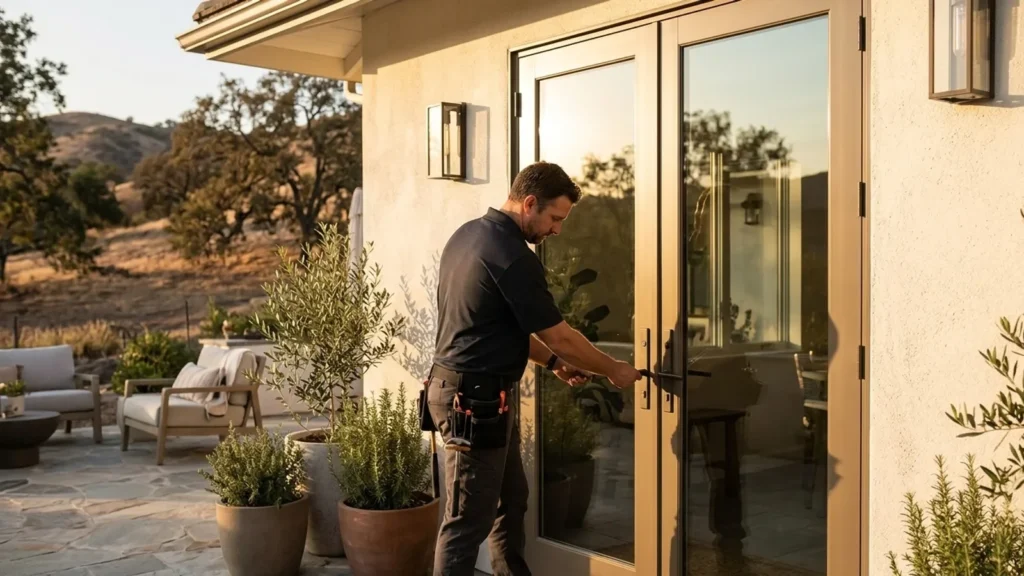
For sun exposure patio doors Thousand Oaks homes can rely on, aluminum French doors paired with heat-reflective glass and a light or mid-tone finish usually hold up best. Aluminum won’t rot, swell or warp in UV light the way untreated wood can. The glass and finish choices decide how much heat comes indoors.
Sun exposure matters because a patio door is the largest piece of glass and frame many rooms have, and it takes direct heat and UV light for hours. That load wears on materials over time. It also warms the room behind it.
Two things happen at once. Ultraviolet light, the invisible part of sunlight, breaks down finishes, seals and some plastics. Infrared light, the part you feel as heat, passes through ordinary glass and warms floors and furniture. On a west-facing wall, that afternoon heat can make a family room feel like a greenhouse.
So when you look at doors for a sunny opening, you’re really weighing three parts. The frame. The glass. The finish. Each one handles the sun differently, and each is worth checking before you decide.
Aluminum handles heat and UV light well structurally, because it doesn’t rot, swell, crack or warp from sun the way untreated wood can. It stays straight. That keeps doors closing true over many seasons.
The trade-off is that aluminum conducts heat easily. A plain aluminum frame in full sun gets hot to the touch and can pass some of that warmth inward. That’s why many modern aluminum doors use a thermal break, which is a strip of less conductive material set inside the frame to slow heat moving from outside to inside. It’s a simple idea that makes a real difference.
Finishes matter too. Powder coating, a baked-on paint layer, generally resists fading and chalking better than a basic painted surface. When you compare exterior French doors in Thousand Oaks, ask how the frame is built and finished, not just how it looks in the showroom.
Dual-pane glass with a low-E coating is usually the strongest choice for a sunny opening. Low-E means low-emissivity, a microscopically thin coating that reflects much of the sun’s infrared heat while still letting visible light through. The room stays bright. It just stays cooler.
Dual-pane, or insulated, glass has two layers with a sealed gap between them. That gap slows heat moving through the door. Many low-E coatings also block a large share of UV light, which helps slow the fading of rugs, wood floors and upholstery near the door.
Tinted glass is another route. It cuts glare and heat but also darkens the view. In most homes, a clear low-E coating gives a better balance, since French doors are usually chosen for the light and the view in the first place. Worth asking about whichever door you consider.
Yes, darker frame colors absorb more sunlight and run hotter than lighter ones. Black and dark bronze look sharp against stucco. They also soak up the most heat.
That doesn’t rule out dark frames. A dark finish on a north-facing door or one under a deep patio cover may barely notice the difference. On a south or west wall in full afternoon sun, a lighter or mid-tone color usually stays cooler to the touch and puts less stress on seals and weatherstripping, the flexible strips that close the gaps around the door panels.
A simple test helps. Stand at the opening around mid-afternoon on a clear day. If the wall is baking, lean lighter or plan for shade. If the spot stays shaded most of the day, pick the color you love.
West- and south-facing doors take the most heat in Southern California, so they benefit most from low-E glass and lighter finishes. East-facing doors get gentler morning sun. North-facing doors get the least direct light.
Most people can’t move their patio, so the goal is to match the door to the wall it’s on. A west-facing opening sees hard, low-angle sun in late afternoon, right when the house is warmest. A south-facing opening gets steady sun most of the day, and in the cooler months the low sun reaches deeper into the room.
Overhangs, pergolas and patio covers change the picture a lot. A deep roof overhang on a south wall can block much of the high summer sun while letting lower winter sun in. If you’re adding a cover anyway, it’s worth planning it with the door in mind.
Both can work well in strong sun, since performance depends mostly on the frame, glass and seals rather than how the door opens. The bigger difference is airflow and space. French doors swing open for a wide, clear opening.
That wide opening is a plus on mild evenings, when you want the ocean-cooled air that often drifts in after a hot day. Sliding doors don’t need swing room, which helps on a small patio or a tight kitchen. A sliding door also keeps half the opening glazed at all times.
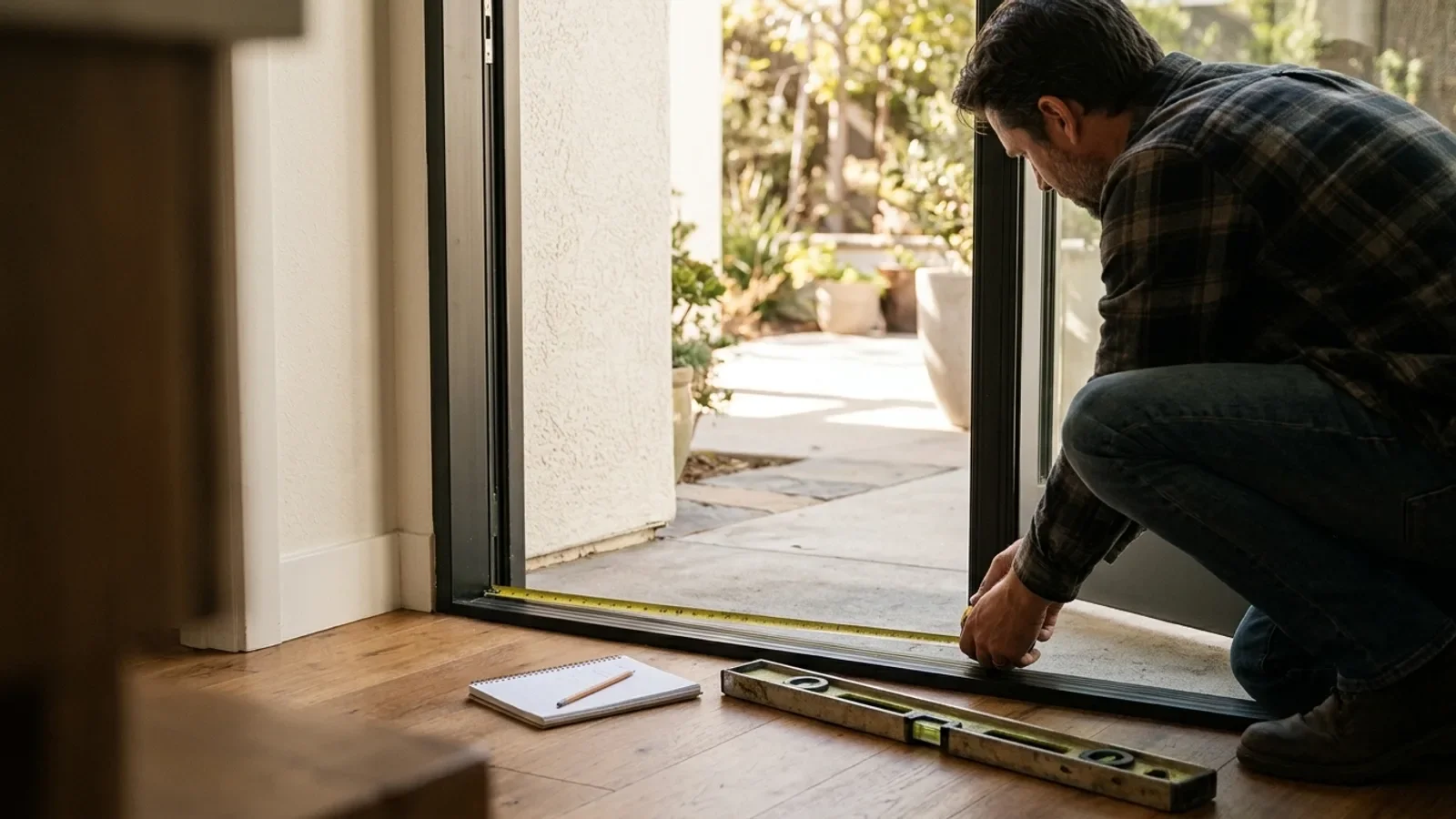
Sizing plays a role here too. A door that fits its opening snugly seals better against hot, dusty wind. Before you order, the guide on measuring your opening for French patio doors walks through the basics so your door sits square and seals well.
Regular gentle cleaning and a quick check of the seals each season usually keeps aluminum French doors in good shape. Sun and dust are the main enemies. Neither needs much effort to manage.
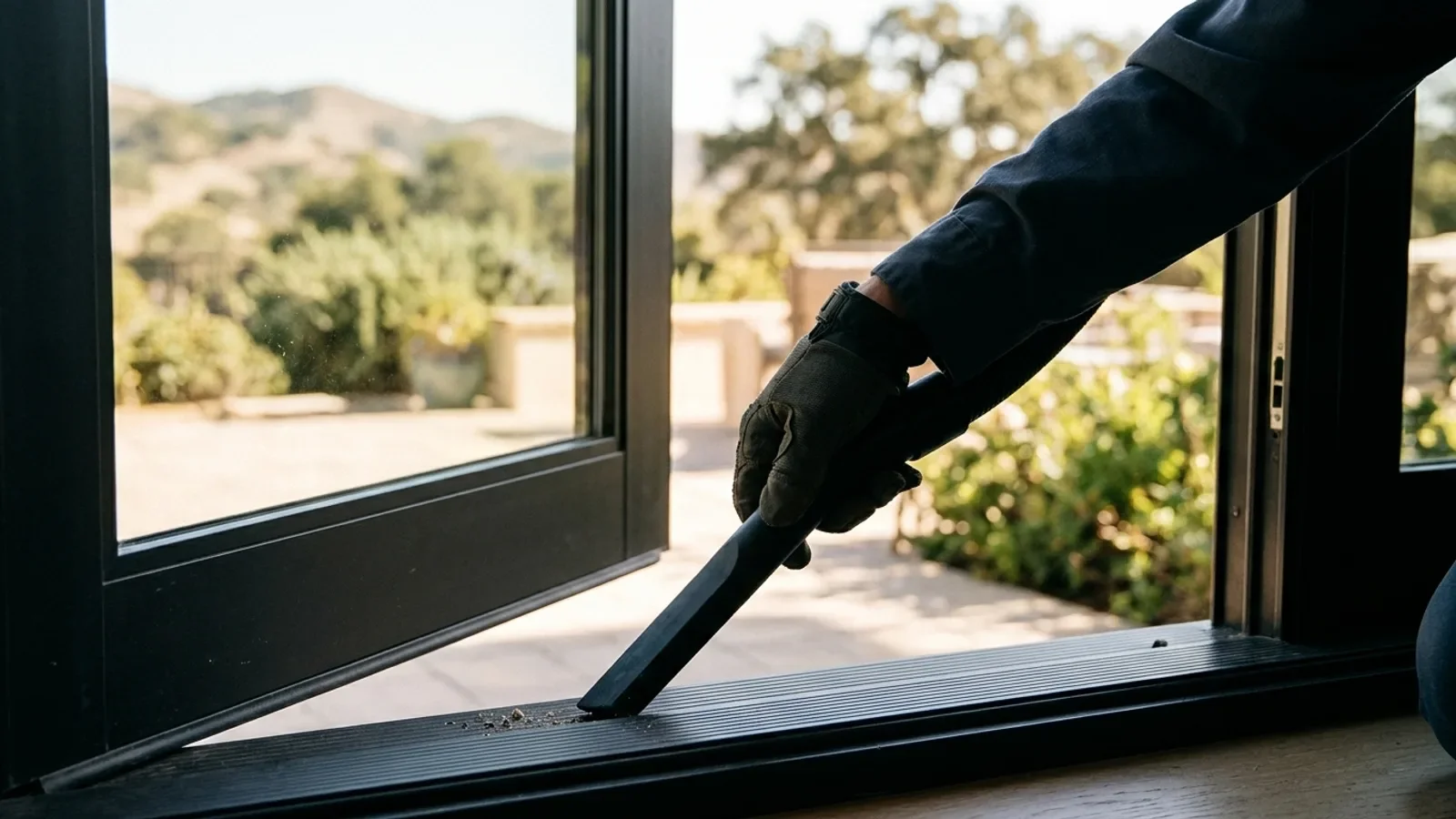
Wash the frames with mild soap and water and a soft cloth. Skip abrasive pads, which can scratch the finish. Rinse the glass and wipe it dry so dust and hard-water spots don’t bake on. Keep the bottom tracks and sills clear of grit, since fine dust builds up fast after a windy stretch.
Look at the weatherstripping a couple of times a year. If it looks flattened, cracked or pulled away, that’s where hot air and dust sneak in. For a fuller routine, see the care guide for aluminum French patio doors.
A well-sealed door with low-E, dual-pane glass can reduce how much heat enters a sunny room, which may ease the load on your air conditioning. How much it helps depends on your home. No door makes a sunny room immune to heat.
The biggest gains usually come from replacing an old single-pane door, or one with worn seals and gaps. In that case, the room often feels noticeably more comfortable on hot afternoons. Swapping one modern door for another may change less.
When you compare quotes, compare what’s actually included: glass type, coatings, thermal break, finish and hardware. A lower number can mean plainer glass. Asking each supplier to list these items side by side makes the comparison fair, and it keeps the focus on choosing the right French patio doors for your home.
Thousand Oaks combines hot, dry inland summers with strong UV, seasonal Santa Ana winds and fairly mild winters, so doors here face more heat and dust than moisture. That mix shapes which features matter most. Rot is rarely the worry. Heat, fading and fine dust are.
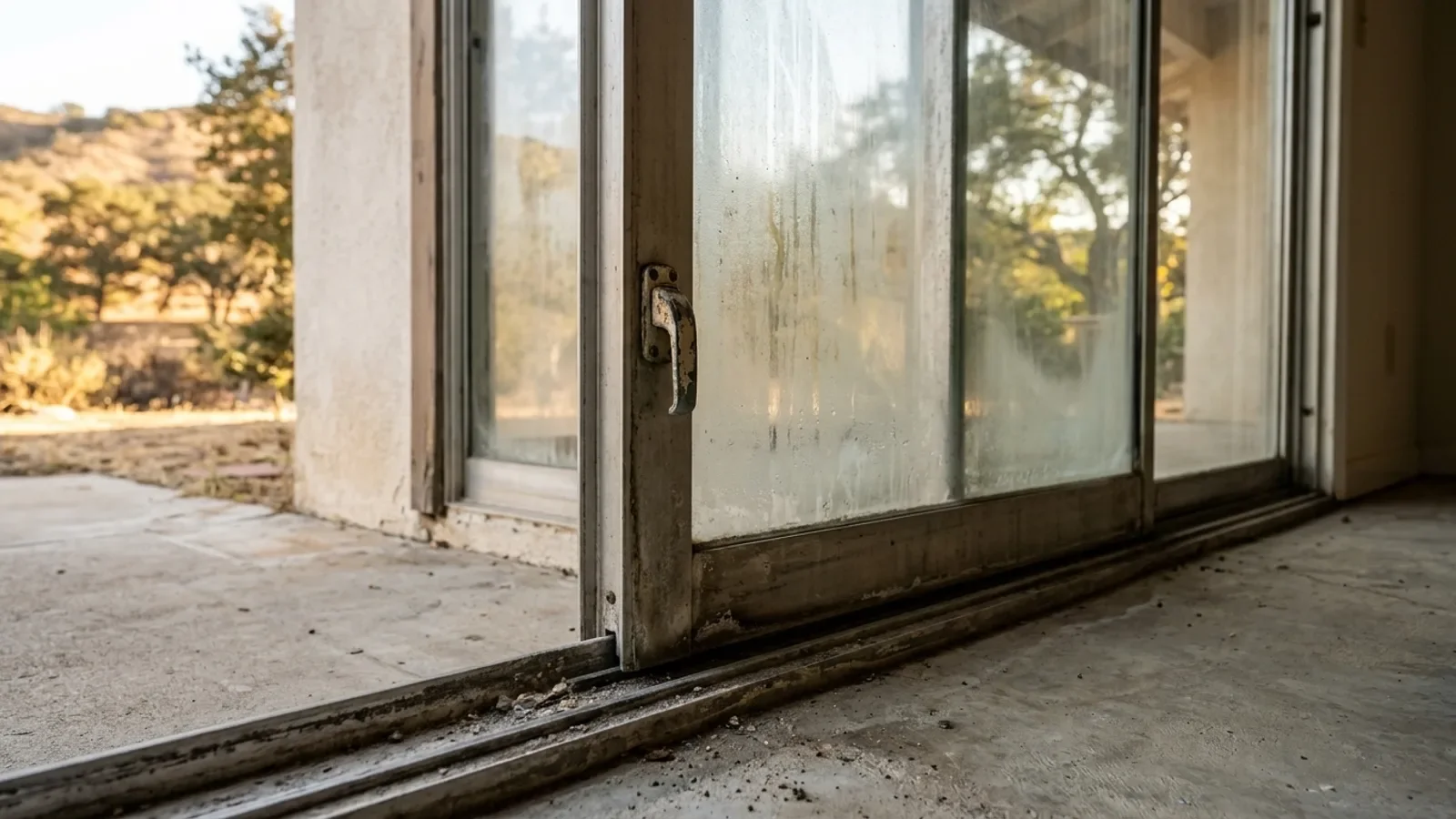
The Conejo Valley sits inland from the coast, so summer afternoons often run well warmer than beach towns a short drive away. Santa Ana winds, which commonly blow in fall and into winter, bring dry, gusty air that pushes dust into tracks and tests weatherstripping. Many neighborhoods were built in the 1960s through the 1980s, and some of those homes still have original patio doors with single-pane glass and tired seals. On those, a modern door with low-E glass is often the most noticeable upgrade.
Rules are worth checking too. California’s Title 24 energy standards can apply to replacement doors and windows, and permit needs vary by project and by city or HOA. Check with the City of Thousand Oaks, your HOA or a licensed installer before work begins.
If you’re ready to see what fits your sunny opening, you can browse aluminum French patio doors made for bright, warm patios and contact Eris Home Products in Thousand Oaks to talk through sizes and finishes.