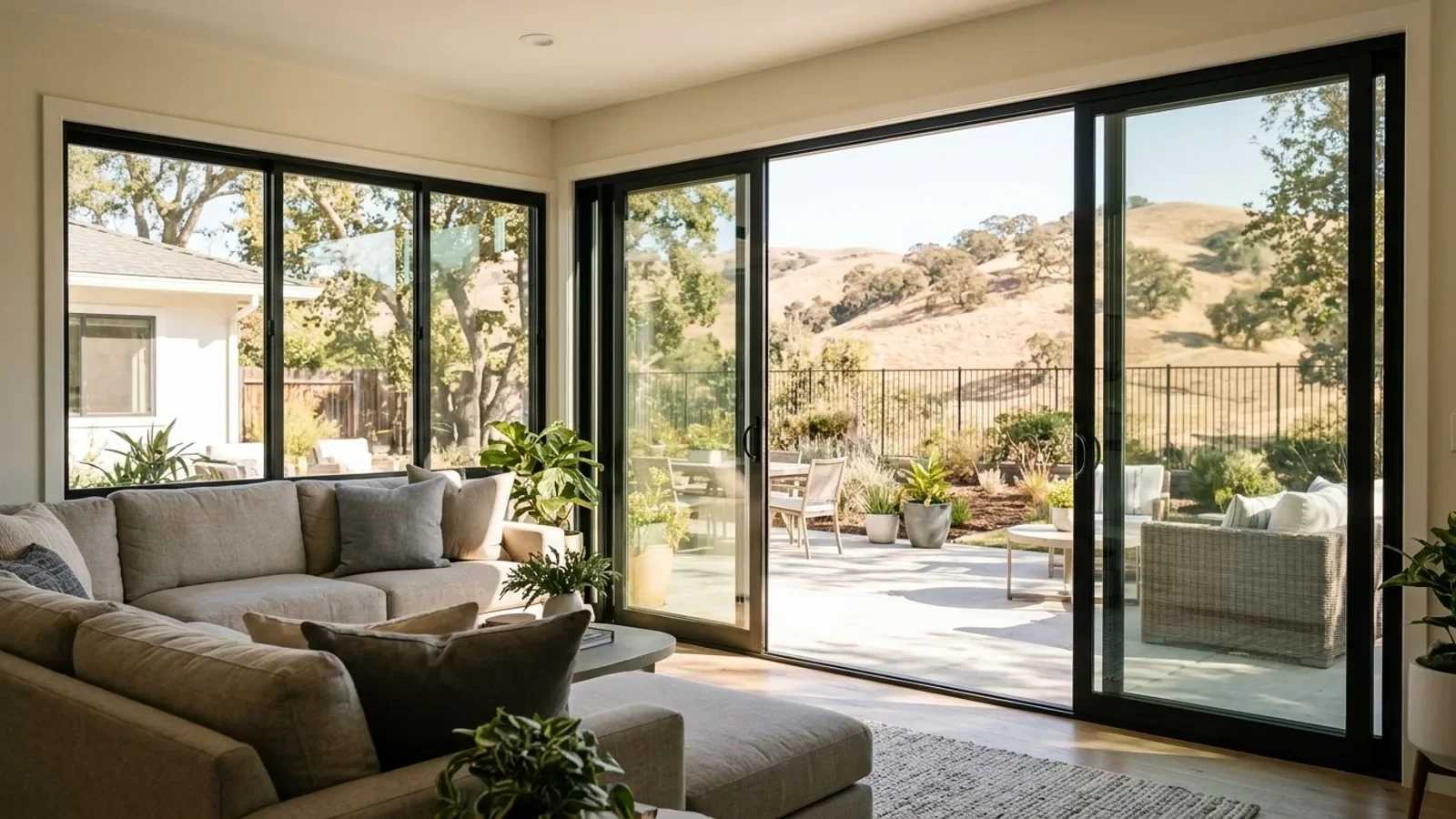

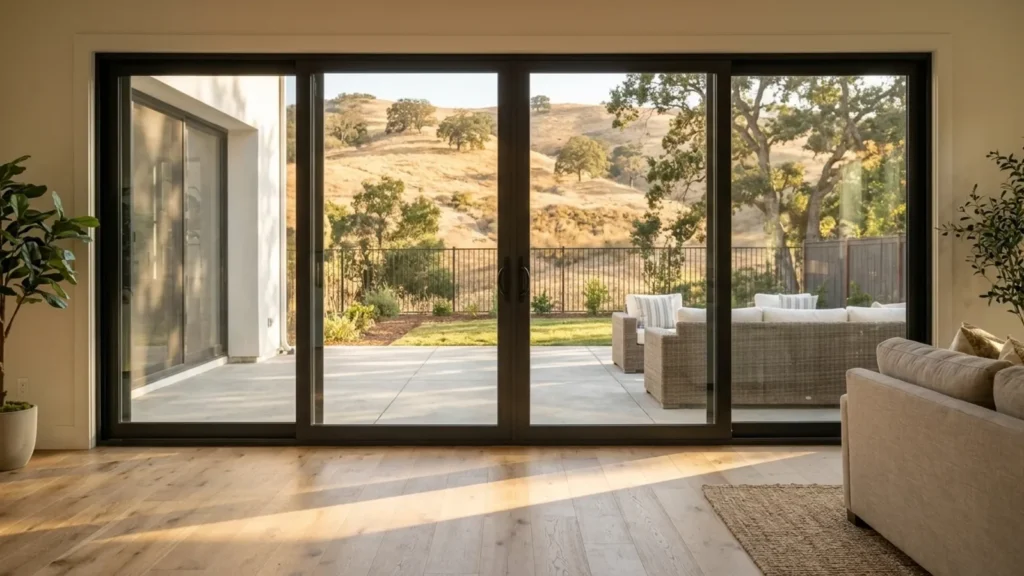
Yes. For energy efficient sliding doors thousand oaks homeowners will find them worth it when the glass is matched to how much sun the opening gets, because glazing choice matters more than the frame or the label. Picture a west-facing slider at four in the afternoon. The floor near the glass is warm to your bare feet, and the AC just kicked on again.
Misinformation about door glass spreads easily in the Conejo Valley. The weather is mild most of the year, so many people assume efficiency barely matters. Then a long, dry summer arrives, and a big wall of glass turns a family room into a sunroom nobody asked for. Below are the myths that come up most, and what’s actually true.
Reality: The problem here is solar heat, not cold. That’s a different fight.
Thousand Oaks sits inland from the coast, so it usually misses much of the marine layer that keeps beach towns cool. Summer and early fall afternoons often run hot and bright, and the sun hits glass hard. A sliding patio door is one of the largest pieces of glass in most homes. That means it can let in a lot of heat.
Winters are gentle, with cool nights rather than deep freezes. So the goal for most local homes is blocking afternoon heat while still letting in daylight. Efficiency still matters. It just looks different than it does in a snowy state.
Reality: Two panes help, but the coating on the glass does much of the work.
Double pane glass (two sheets with a sealed gap between them) slows heat moving through by conduction. That’s useful on cool nights. It does far less against direct sunlight streaming in, though.
That’s where low-E glass comes in. Low-E means low emissivity: a microscopically thin metal coating that reflects much of the sun’s infrared heat while letting visible light pass. In a sunny inland climate, a low-E coating is usually the feature that makes the biggest difference. Clear double pane without it can still feel warm on a summer afternoon. Worth checking before you buy.
Reality: In Thousand Oaks, the solar heat gain coefficient often matters just as much, sometimes more.
Window and door labels from the National Fenestration Rating Council list a few ratings. Two matter most for sunny patios:
For a south or west-facing slider in the Conejo Valley, a lower SHGC usually pays off. The trick is balance. Push SHGC too low with heavy tint and you lose the bright, open view that made you want a glass door. Many modern low-E coatings keep VT reasonably high while cutting heat. Comparing all three numbers side by side is simple and tells you a lot.
Reality: Orientation changes everything. A north-facing door and a west-facing door live different lives.
Morning sun on an east-facing patio is softer and gone by midday. Afternoon sun on a west-facing door is low, direct and arrives right when the house is already warm. South-facing glass gets steady sun most of the day, though a roof overhang can shade it well in summer, when the sun rides high.
In most homes, the west and southwest openings deserve the most attention. North-facing glass gets little direct sun, so you can often favor clearer glass and more daylight there. If you’re weighing different door styles for different walls, our look at how aluminum sliders and French doors compare covers how the frame and panel layout affect the glass area too.
Reality: Size matters, but glass quality and shading matter more.
It’s true that more glass means more surface for sun to hit. A wide multi-panel slider facing west, with clear glass and no shade, will warm a room fast. That doesn’t mean you have to shrink the opening.
A large door with a low-SHGC coating, a good overhang or patio cover, and tight weatherstripping can perform far better than a small door with plain glass. Sizing, glass and track style all work together. Our guide to sliding patio door options for Thousand Oaks homes walks through how to plan width, panel count and glazing as one decision rather than three.
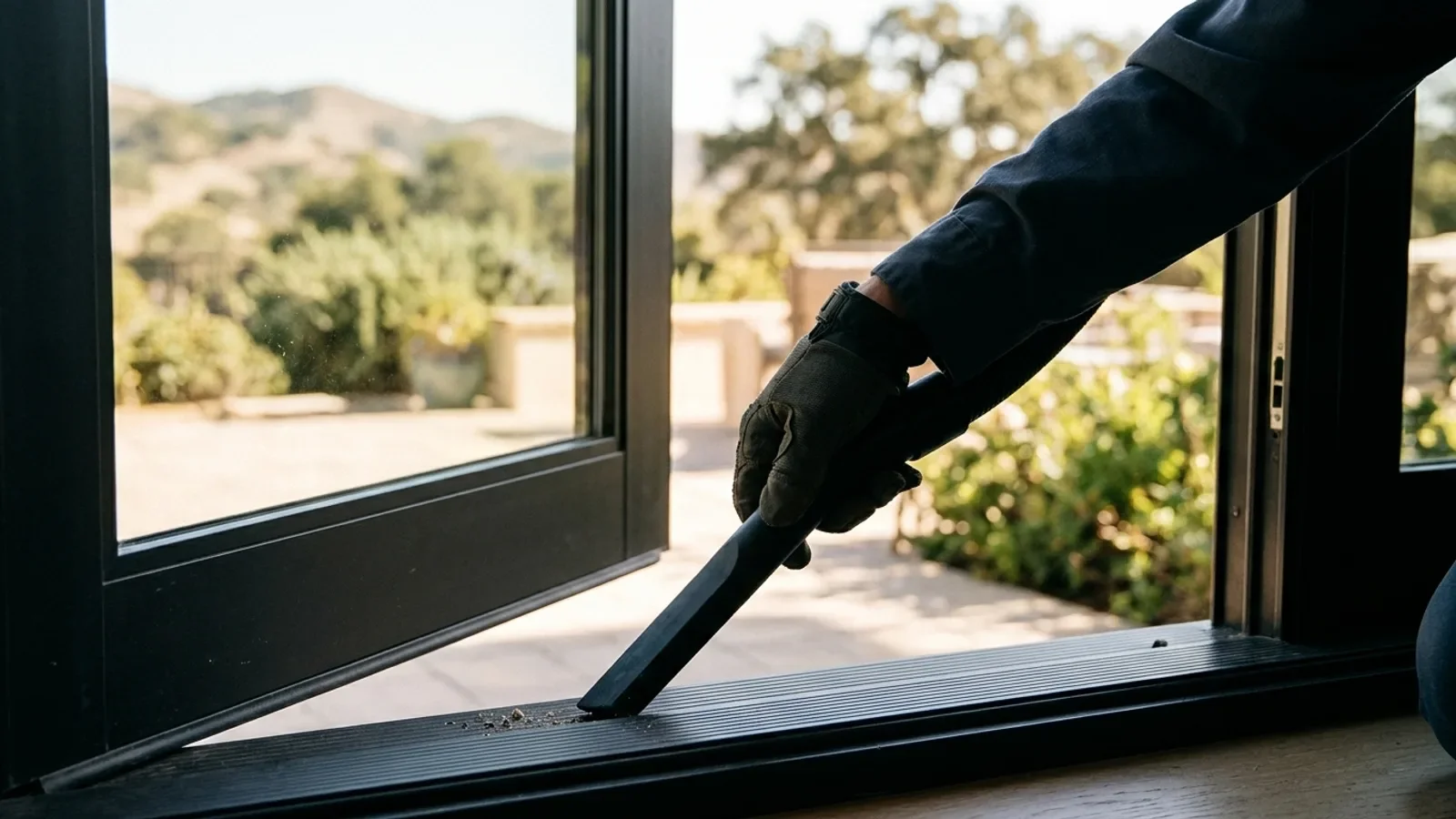
Reality: The frame, seals and track all affect how well the whole door holds back heat.
Glass is the biggest surface. Still, heat and air sneak in around the edges. Here’s what else plays a part:
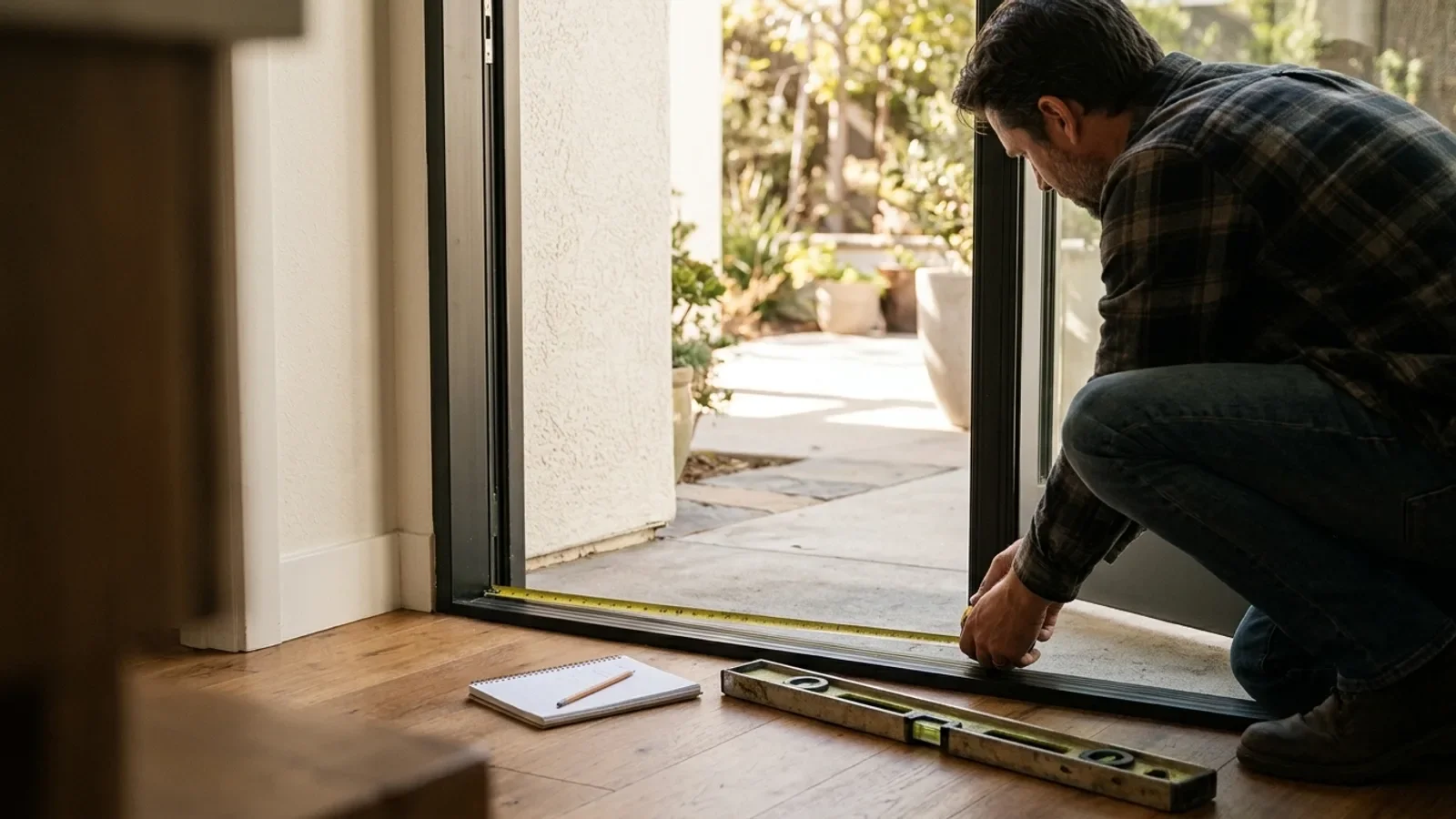
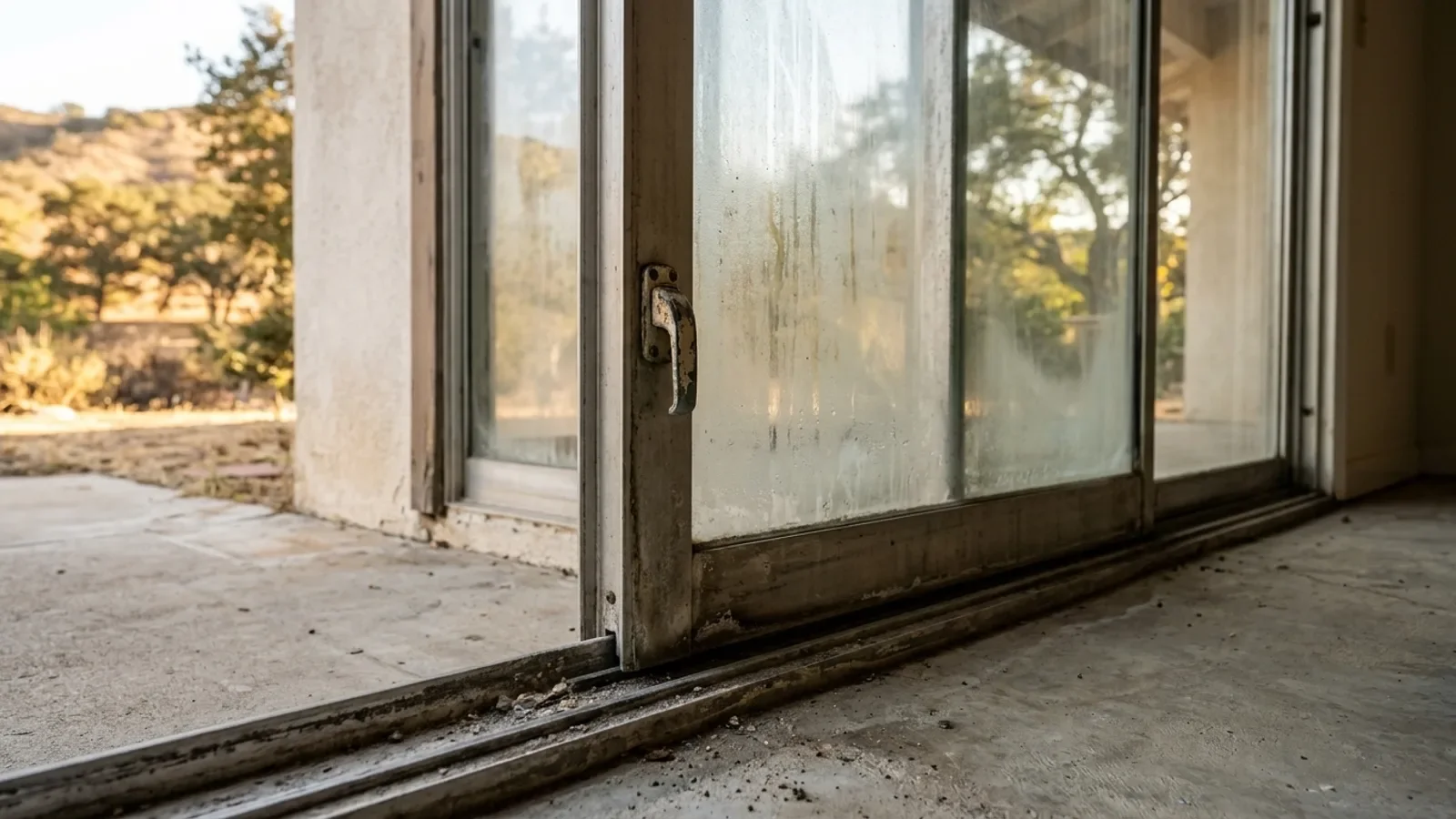
If your current slider sticks, rattles or lets light show around the edges, those are often clues the seals or rollers are done. Our article on when it’s time to replace an old patio door lists the signs worth checking.
Reality: Tint darkens glass. Low-E reflects heat. They work in different ways.
Tinted glass absorbs some sunlight, which cuts glare and some heat. But it also cuts daylight and changes the color of your view. The glass itself can get warm as it absorbs energy.
Low-E coatings are nearly invisible in most light. They’re designed to reflect infrared heat while passing most visible light. For a patio door where the view of your yard, the hills or the pool is the whole point, low-E usually keeps the room brighter. Some homes use both on very exposed walls. That’s a judgment call based on glare and orientation.
Reality: Good glass and good shade work best as a team.
Even the best coating lets some heat through. Exterior shade stops sun before it ever reaches the glass, which is the most effective spot to stop it. A patio cover, a pergola with a solid top, a deep roof overhang or a well-placed shade tree can make a real difference on a west-facing patio.
Interior blinds and curtains help with glare and privacy. They’re less effective at heat, because the sunlight has already passed through the glass by then. Right now, in late November, the low winter sun reaches deeper into rooms. Many homeowners notice that pleasant warmth and forget how intense the same opening felt back in August. It’s a good season to plan, before next summer’s heat.
A double pane unit with a low-E coating and a relatively low SHGC usually performs well against strong afternoon sun. Check the visible transmittance too, so the room still feels bright.
California’s energy code often sets glass performance requirements for replacement doors and windows, but requirements vary by project and by area. Check with your local building department or a licensed installer about permits for your specific job.
It can reduce how much heat comes through that opening, which may ease the load on your AC during hot months. The actual effect depends on orientation, shading, insulation and how you use the room.
Aluminum holds its shape well in heat and sun, and frames with a thermal break slow heat transfer through the metal. Paired with low-E glass, they suit many inland Southern California homes.
If a sunny patio has you rethinking your glass, the simple next step is to browse sliding patio door styles and glass options from Eris Home Products and match one to the way the sun hits your home.
Get expert advice for your project.
Contact us today!