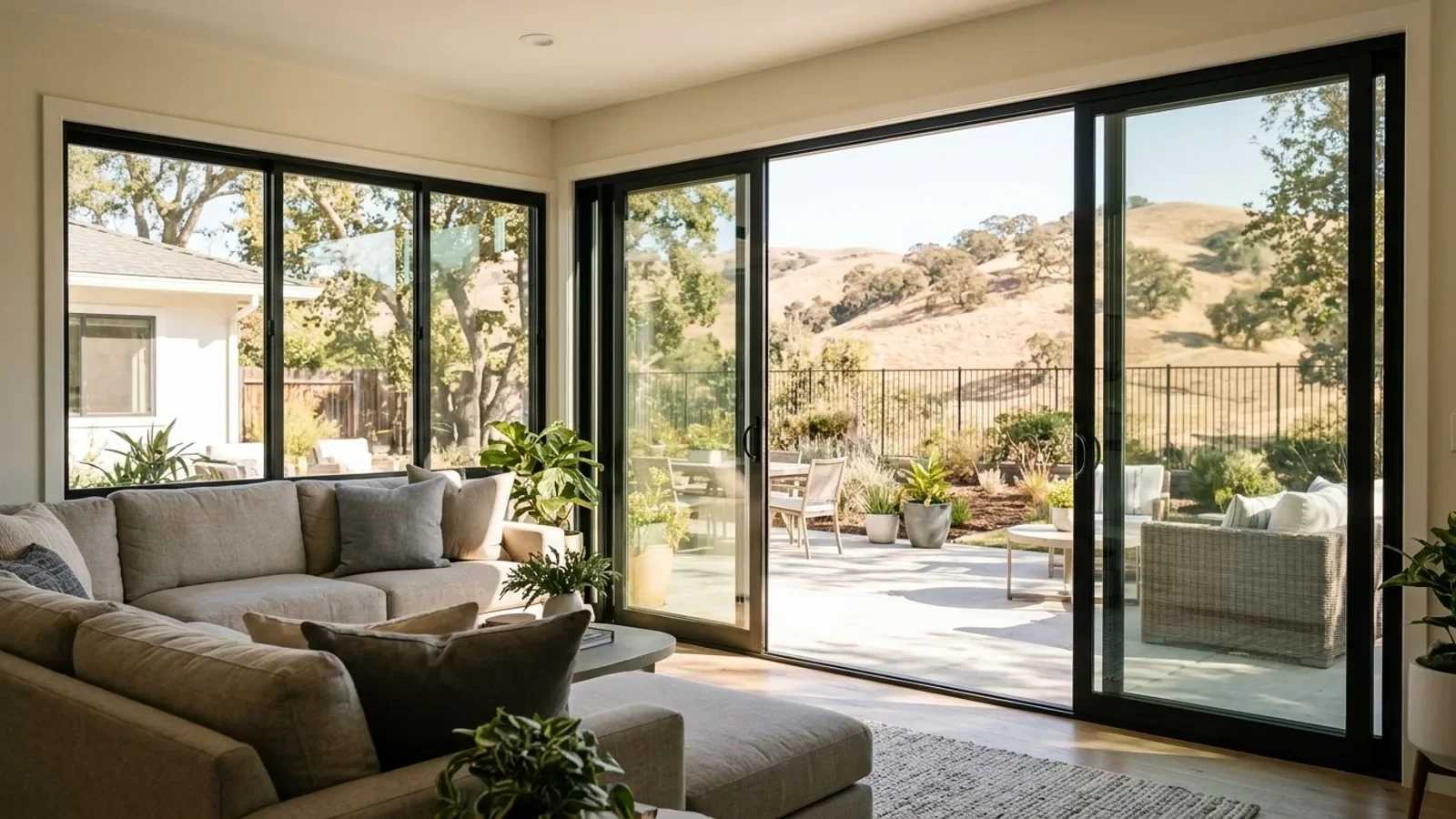


Choosing sliding patio doors Thousand Oaks homes need is less about the glass than most people think. The real decision is the track: flush or raised. That choice, along with panel size and glass type, decides how the door feels underfoot, how it handles wind-driven rain and how much patio view you get. It matters most for homeowners replacing an older slider or opening a wall to the yard.
A flush track is set into the floor so its top sits level with the finished surface. You step across it without noticing it. That’s the whole appeal.
A flush track suits homes where the indoor floor and the patio sit at nearly the same height. It also helps anyone who finds a raised sill awkward, such as a family member with a walker or a toddler learning to walk. Furniture and serving carts roll straight through.
The trade-off is installation. A recessed track usually needs a pocket cut or formed into the slab or subfloor, plus a plan for where water goes. It works best in new construction or a remodel where the floor is already open. On a simple swap of an old slider, it can mean more work than you expect.
Water management is the other point worth checking. A flush track depends on good drainage and a covered or sheltered patio. Under a deep overhang, it can be a great fit. Facing open lawn with no cover, think it through first.
A raised track sits on top of the floor, with a small step or sill at the threshold. Most older sliding glass doors in Thousand Oaks use this style. It is the simpler, more forgiving choice for a straight replacement.
The raised sill does a real job. It forms a dam that helps keep wind-driven rain on the outside, and it gives the weatherstripping (the rubber or brush seals around the panels) something solid to press against. For an exposed opening, that matters.
Installation is usually simpler too. A raised track can often fit the existing opening without cutting the floor, which keeps the project shorter. The downside is the small step. You’ll notice it every time you carry a tray outside.
Modern low-profile raised tracks split the difference. They keep a short sill for weather protection but sit lower than the chunky tracks on many older homes. Ask about them if a full flush track isn’t practical.
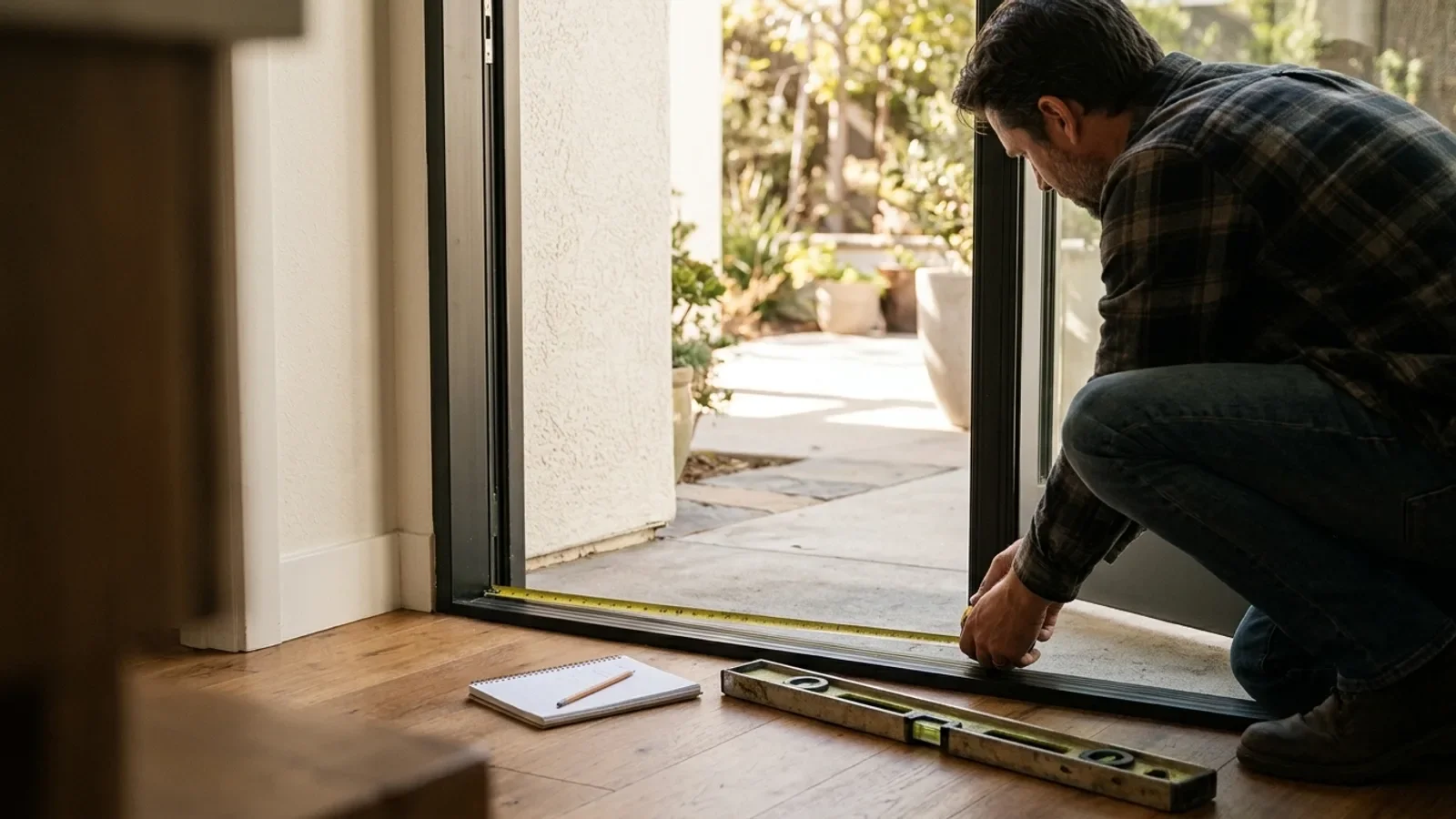
Sizing starts with the rough opening, which is the framed hole in the wall, not the door currently in it. Measure width and height at several points, because older framing is rarely perfectly square. The smallest measurement usually wins.
From there, the question is how many panels you want and how they move:
Panel width affects the feel. Wider panels mean fewer frame lines in your view but more weight to move. Narrower panels glide easily but add more vertical breaks. Height counts too. A taller door brings in more light and makes a room feel bigger.
If you want the whole wall to open, a slider may not be the right tool. A bifold folds away completely, and a French door swings open. Our guide to how aluminum and French patio doors compare walks through that choice.
Thousand Oaks’s housing stock and climate push the decision in specific directions. Many neighborhoods were built out from the 1960s through the 1990s, and a lot of those homes still have their original or early-replacement sliders on raised aluminum tracks.
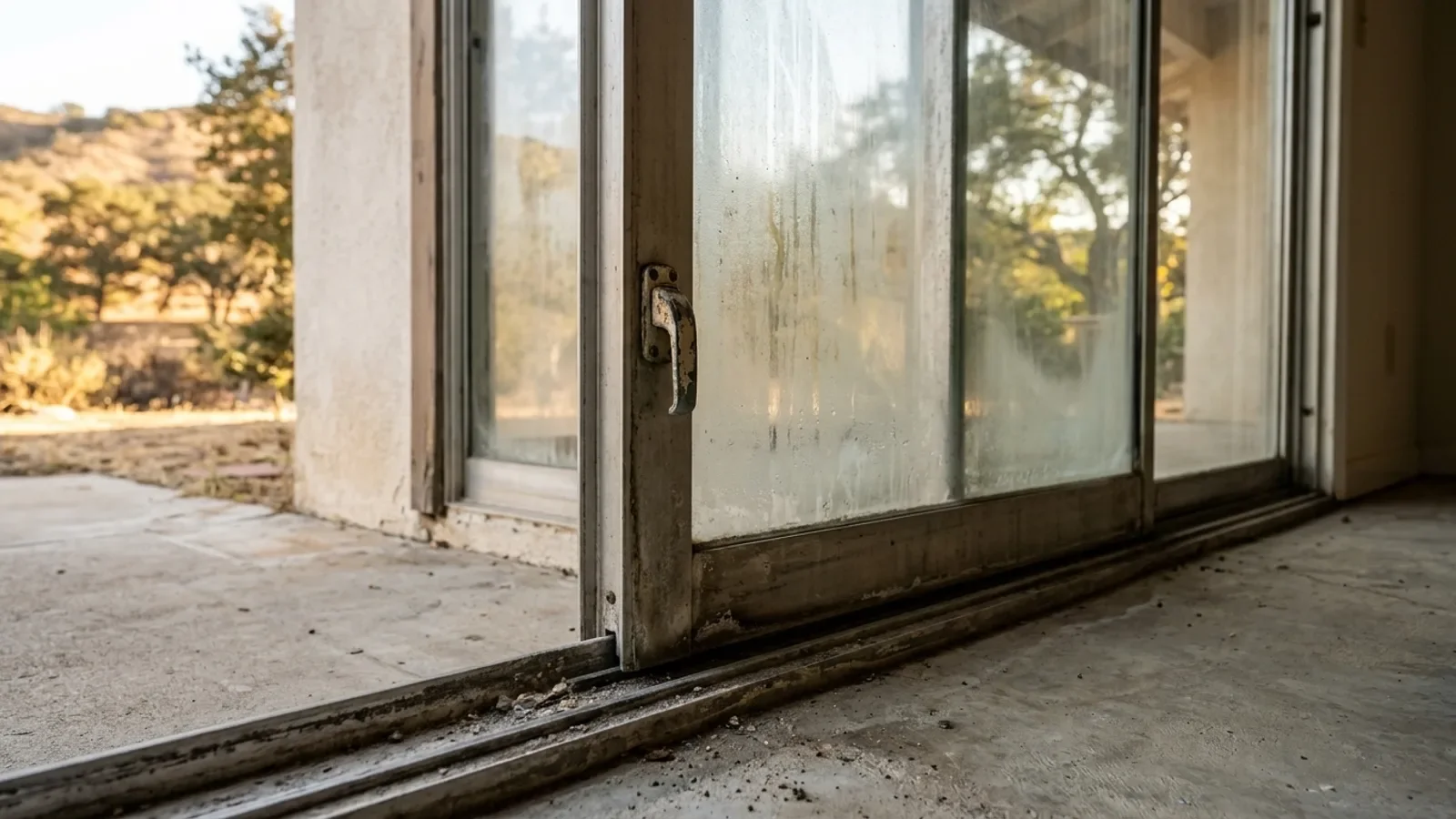
That age shows up in a few ways. Older tracks wear down, rollers flatten and frames can sit slightly out of square after decades of settling. Replacing a slider in one of these homes is usually a raised-track job unless you’re also redoing the floor.
Climate matters next. The Conejo Valley gets long, hot, sunny summers and dry Santa Ana winds in fall and winter, which can carry dust and grit into tracks. Rain is limited and mostly falls in winter, though storms can still drive water at an exposed opening. Late fall is a good stretch to sort this out, before the wettest months arrive.
Local requirements can apply as well. California’s energy code (Title 24) sets performance expectations for new and replacement glazing, and the City of Thousand Oaks may require a permit for some door replacements. Requirements vary by project, so check with the city or a licensed installer before you finalize anything.
For most Thousand Oaks homes, dual-pane glass with a low-E coating is the sensible baseline. Low-E (low-emissivity) is a thin coating that reflects heat while letting light through. It helps a south- or west-facing slider stay comfortable on summer afternoons.
Tempered glass is standard for doors. It is heat-treated so that if it breaks, it crumbles into small pieces instead of sharp shards. Laminated glass, which holds together when cracked, is another option if you want extra sound control or security.
Labels help when comparing. The National Fenestration Rating Council rates doors for heat gain (SHGC) and insulation (U-factor). Lower numbers are generally better in a sunny climate. For a deeper look, read our piece on picking energy-efficient glass for a patio door.
Here’s how the two track styles compare on the points that usually decide it.
| Criteria | Flush track | Raised track |
|---|---|---|
| Threshold feel | Level with the floor, nearly invisible | Small step or sill to cross |
| Weather resistance | Relies on drainage and patio cover | Sill helps block wind-driven rain |
| Installation scope | Usually needs floor or slab work | Often fits the existing opening |
| Best project type | New builds and full remodels | Straight replacements |
| Accessibility | Easy for wheelchairs, walkers, carts | Step can be a trip point |
| Debris and cleaning | Recessed channel needs regular clearing | Easier to wipe out grit |
For most Thousand Oaks homeowners replacing an existing slider, a raised or low-profile track is the practical pick. It usually fits the current opening, it handles exposed patios well and it keeps the job simpler.
Choose a flush track when you’re already opening the floor, when the patio is covered and level with the room, or when a step-free threshold really matters for your household. In those cases the clean look is worth the extra planning.
Either way, pair the track with dual-pane low-E glass and a panel layout sized to the rough opening. That combination covers the main patio door replacement considerations for this climate. Not sure your current door is done? Our list of signs a patio door is ready to go can help you decide.
Eris Home Products in Thousand Oaks supplies sliding patio doors alongside French, bifold and single patio doors. You can compare styles in one place. Reach out when you have your measurements.
Yes, but it usually means cutting or reworking the floor at the threshold and planning drainage. It is easiest during a remodel when the flooring is already coming up.
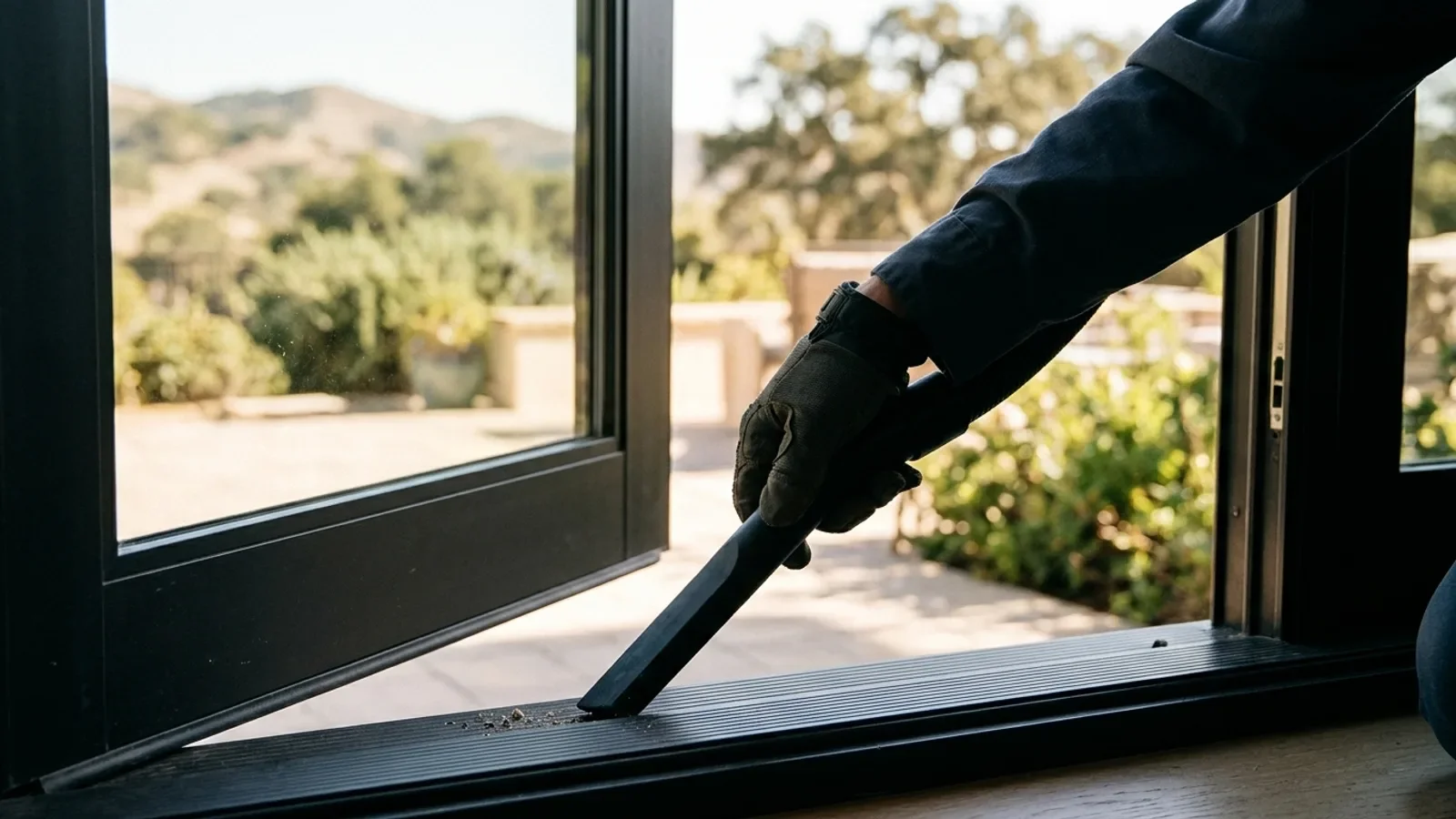
Vacuum grit out of the track regularly, especially after Santa Ana wind events, and wipe it with a damp cloth. If the door still drags, the rollers may be worn and worth having checked.
It depends on the project. Changing the opening size or structure typically needs one, and energy rules may apply to new glass, so confirm with the city or a licensed installer.
A sliding door is usually better when floor space is tight, because the panels don’t swing or fold into the room. A bifold opens wider but needs clear space where the panels stack.
Your next step is simple: measure the rough opening, note whether your patio is covered, then talk with us about a sliding door for your opening.