Shopping for a bifold door for the first time can feel like reading a foreign language — panel counts, swing directions, sizes listed as strings of numbers. Once you know what you’re looking at, though, buying bifold doors becomes a lot more straightforward. Here’s a practical breakdown to help you shop with confidence instead of guessing.
Reading Bifold Door Sizing
Sizes are typically listed as width by height in inches — for example, a 120″ x 96″ configuration is 10 feet wide and 8 feet tall. Stock sizes generally range from around 72 inches up to 216 inches in width, giving you options anywhere from a compact single-panel opening to a full wall-spanning six-panel system.
Outswing vs. Inswing
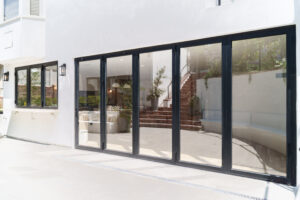
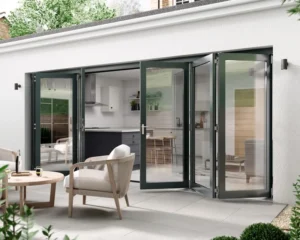
This refers to which direction the panels fold when opened. Outswing systems fold outward onto the patio, which keeps the panels from taking up interior floor space — useful if furniture sits close to the opening indoors. Inswing systems fold into the room instead, which some homeowners prefer when patio space is tight or when weather protection for the folded panels is a priority.
Which Should You Choose?
Walk the actual space with both configurations in mind. Stand where the panels would stack and picture furniture, planters, or foot traffic in that spot — that’s usually enough to make the decision obvious.
Panel Configurations
Configurations are often labeled with a combination of numbers and letters — such as “1L3R,” meaning one panel active on the left and three panels folding to the right. More panels generally mean a wider total opening, but also more hardware and a longer stack length when folded, so it’s worth matching panel count to your actual wall space rather than defaulting to the widest option available.
What Actually Drives Price
Across our current stock configurations, bifold doors range roughly from the mid $2,000s for a smaller three-panel outswing system up to $10,000+ for a large six-panel, 18-foot-wide configuration. The main factors affecting price are:
- Total width and panel count — more glass and hardware means higher cost
- Height — taller configurations require more material and structural reinforcement
- Finish color — black and white are our standard stock finishes
- In-stock vs. custom — custom sizing outside standard dimensions generally costs more than stock configurations
A lot of homes in and around Newbury Park have patios sized for a mid-range configuration — something in the 8 to 12-foot width range tends to fit comfortably without overwhelming a standard backyard layout. That’s a useful starting reference point if you’re not sure where to begin sizing your own project.
Common Questions
What’s the difference between stock and custom sizing?
Stock sizes are pre-manufactured in common dimensions and ready to ship faster. Custom sizing is built to your exact opening but takes longer to produce.
Can I mix outswing and inswing on the same project?
Generally each opening is configured as one or the other, but different openings around the same home can absolutely use different configurations based on what each space needs.
Do all configurations come in both black and white?
Availability varies by specific size and configuration — it’s worth checking current stock for your exact dimensions.
Is shipping included in the listed price?
We offer nationwide shipping on our bifold door orders — confirm current shipping terms when you place your order.
Ready to Compare Configurations for Your Space?
Eris Home Products, 2300 Corporate Center Dr, Thousand Oaks, CA 91320, keeps a range of stock bifold configurations ready to ship, with custom sizing available for non-standard openings.
Call 805-375-6333, browse current stock on our Shop Bifold Doors page, or visit us via Google Maps.