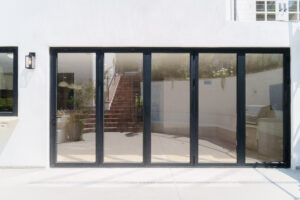
By the time most homeowners reach out to us, they’ve usually narrowed things down to two or three options without fully deciding between them. Sliding doors come up constantly in these conversations — not because they’re automatically the “right” answer, but because they solve a specific set of problems really well. The question is whether those are the problems you’re actually trying to solve.
Here’s how sliding doors stack up against bifold and French doors, so you can figure out which one actually fits your space.
Sliding Doors vs. Bifold Doors
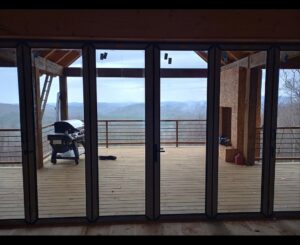
The biggest difference comes down to how much of the opening actually becomes usable space. A sliding door leaves roughly half the opening covered by the fixed panel, while a bifold door can open the majority — or all — of the width, since the panels fold and stack to the side.
That makes bifold doors the stronger choice when the goal is a true wide-open connection between indoor and outdoor space. Sliding doors make more sense when you want a large glass opening without needing the entire wall to disappear, or when floor space for stacked panels isn’t available. You can compare both product lines on our Sliding Doors and Bifold and Patio Doors pages.
Sliding Doors vs. French Doors
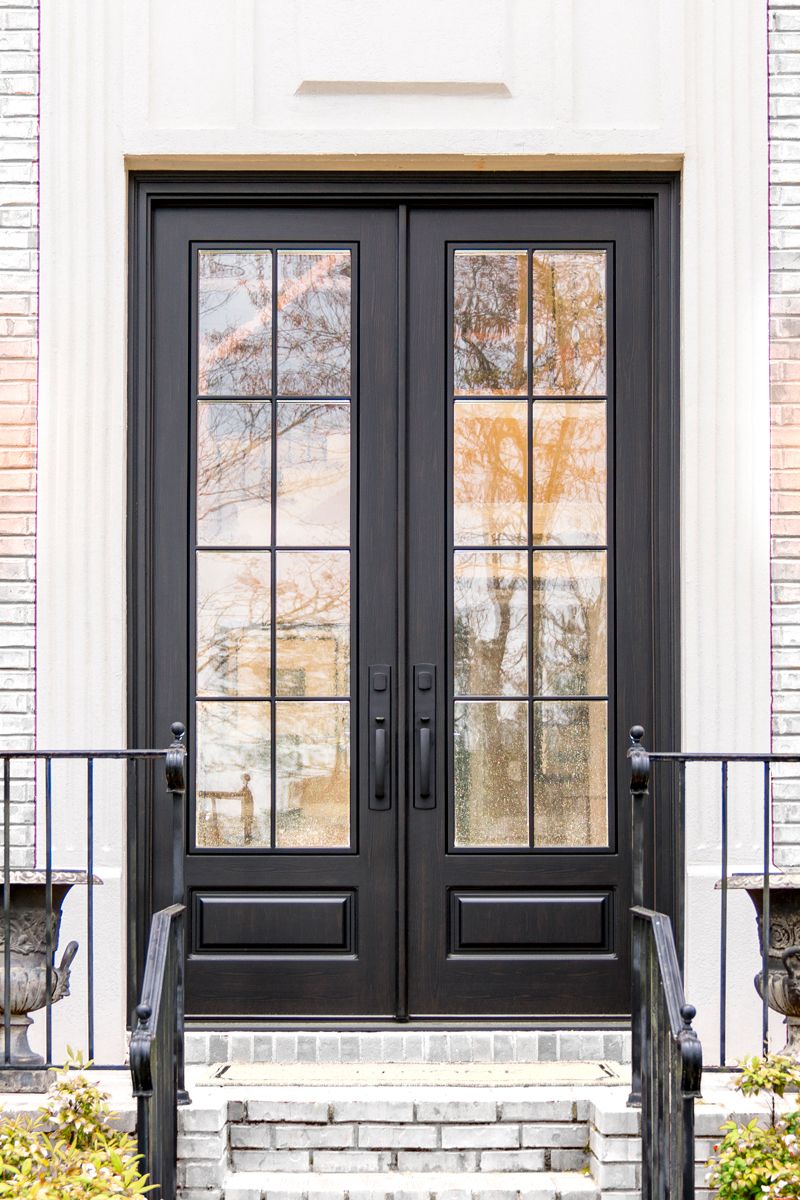
French doors swing open rather than sliding along a track, which means they need floor clearance on whichever side they open toward. Sliding doors don’t require that clearance, which makes them more practical in spaces where furniture is placed close to the opening.
Visually, French doors tend to read as more traditional and symmetrical, while sliding doors lean toward a cleaner, more minimal look with less visible framing. Neither is objectively better — it depends on the architectural style you’re working with and how the space around the door is used.
A Simple Way to Think Through It
- If floor space near the door is tight: sliding doors are usually the more practical choice.
- If you want the widest possible opening: bifold doors typically deliver the most usable width.
- If your home leans traditional or symmetrical in style: French doors often complement that architecture most naturally.
- If ease of everyday use is the priority: sliding doors tend to be the simplest to operate one-handed, multiple times a day.
Door Choices Across the Conejo Valley
Homes throughout the Conejo Valley range from compact single-story layouts to larger properties with expansive outdoor living areas, which is part of why there isn’t one “default” door choice that fits every project we see. The right answer really does come down to the specific opening, the architecture, and how the homeowner plans to use the space.
Common Questions
Which option is easiest to maintain long-term?
All three require some routine care — track cleaning for sliders, hinge checks for French and bifold doors — but sliding doors generally involve the least hardware overall.
Can I mix door types in the same home?
Yes, many homeowners use different door styles for different openings based on each space’s specific layout and function.
Which option is best for a smaller backyard?
Sliding doors are often a practical fit for smaller spaces, since they don’t require the swing clearance that French doors need or the panel-stacking space that bifold systems use.
Do sliding doors let in as much light as bifold doors?
Generally, yes in terms of glass area, though bifold doors offer a wider fully-open view since more of the wall disappears when opened.
Still Deciding Between Door Styles?
If you’re weighing sliding doors against bifold or French options, it helps to talk through your specific layout and goals before deciding.
📞 Call 805-375-6333, browse our Sliding Doors collection, or request a free quote to get started.
READ MORE:
Iron Doors: 6 Questions Worth Asking Before You Buy
French Doors and Curb Appeal: What Actually Shapes First Impressions