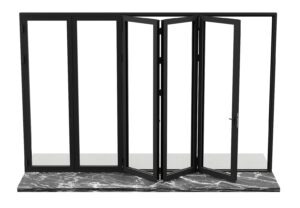
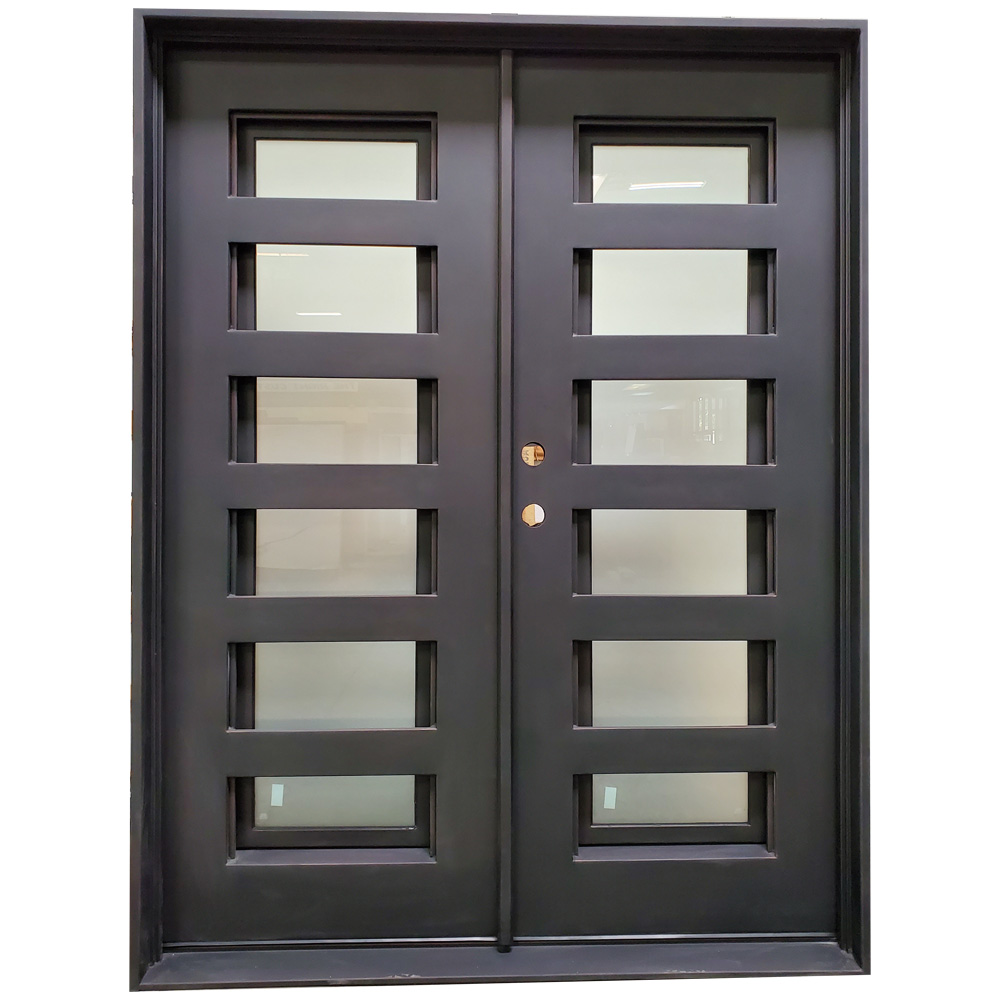
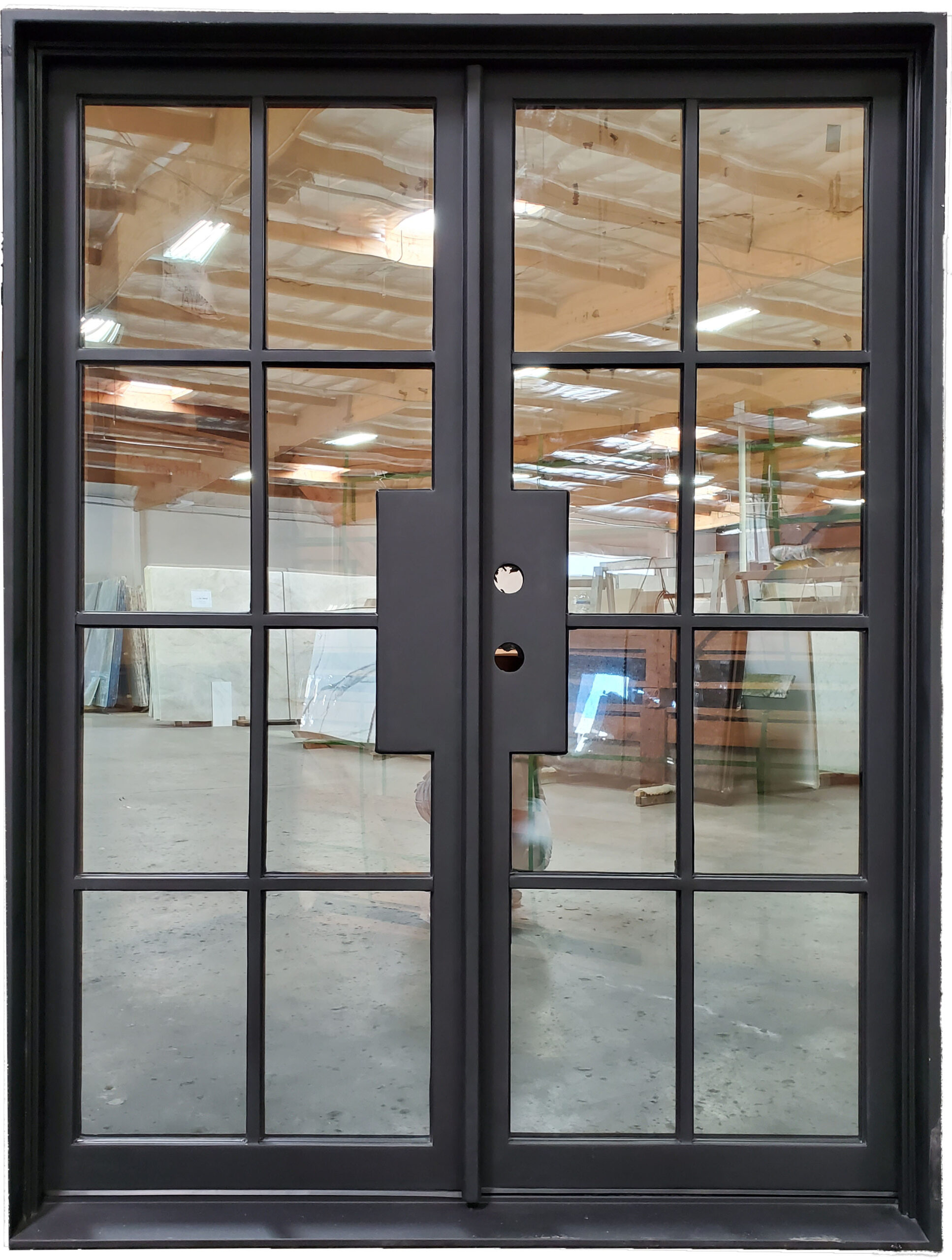
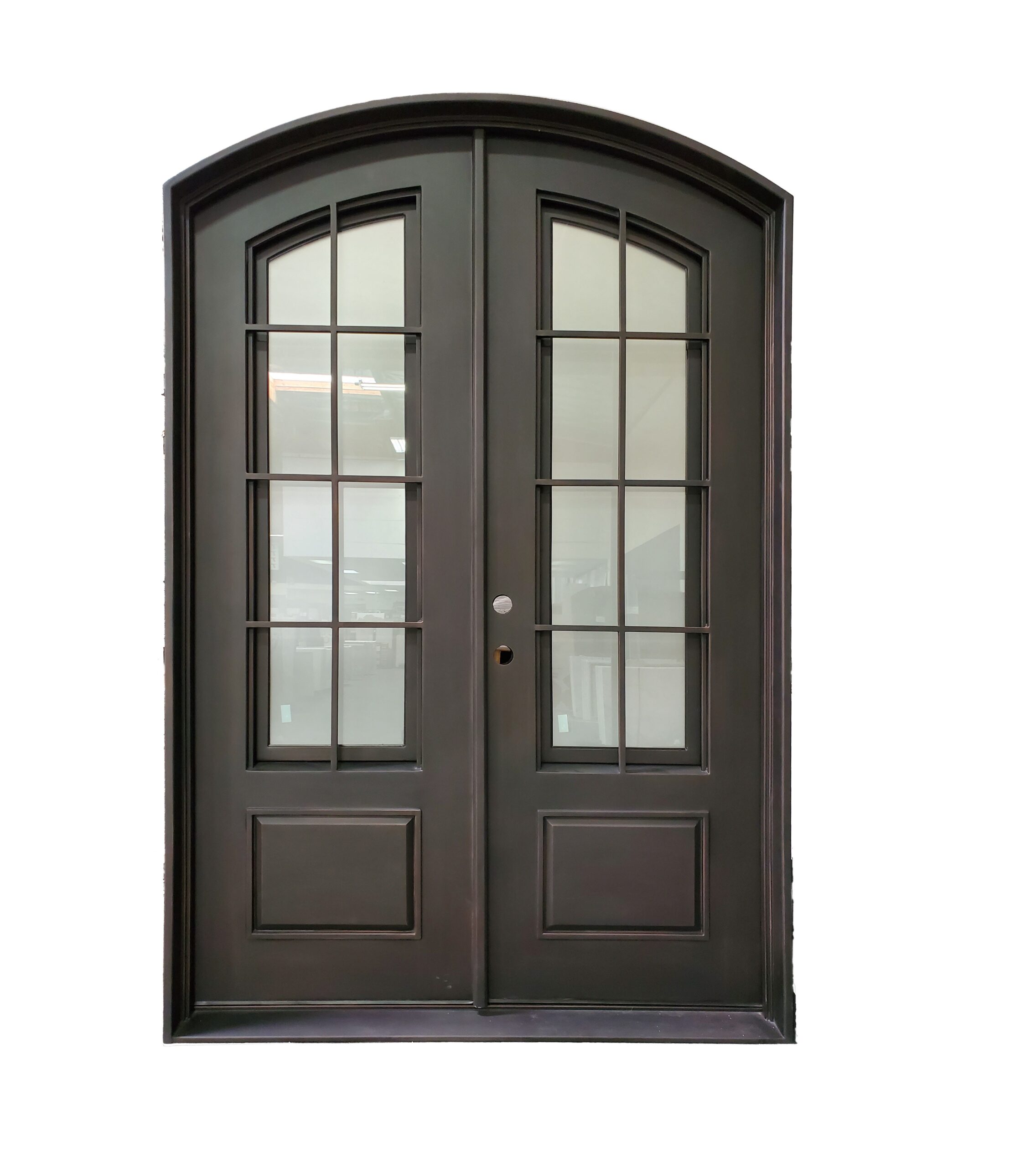
People often assume “iron door” just means a heavier version of a standard entry door. The construction is actually quite different, and understanding it helps explain why wrought iron entry doors hold up the way they do and why they carry the price point they do. Here’s a look at what’s actually inside one.
Core Construction: Steel Gauge and Solid Bar
Our wrought iron doors are built from 14-gauge steel with 5/8-inch solid bars forming the decorative and structural elements. The gauge number refers to the thickness of the steel sheet metal — a lower gauge number means thicker, heavier material. Combined with solid (not hollow) bar stock for the scrollwork and framing details, the result is a door with genuine structural mass, not just a heavy appearance. You can browse our current styles on the Iron Doors page.
The Threshold and Frame
A heavy door needs hardware built to match. Our iron doors use an iron threshold along with a reinforced frame and heavy-duty hinges specifically sized to support the weight of a large wrought iron panel over years of daily use without sagging or misaligning.
Glass and Hardware Details
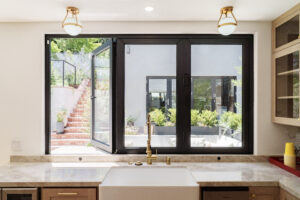
Iron latches and hooks handle day-to-day security and convenience, and glass panels are designed with operable sections that can be opened independently from the door itself — useful for airflow without needing to open the full door. Doors and frames are foam-injected for insulation and sealed with weather stripping against the elements, paired with dual-tempered insulated glass for energy retention.
Why Foam Injection Matters
Injecting polyurethane foam into the door and frame cavities does two things at once: it adds insulating value, and it helps prevent internal rust formation by reducing trapped moisture and temperature swings inside the structure.
Iron Entries in Thousand Oaks Architecture
The architectural mix across Thousand Oaks — from Mediterranean-influenced homes to more contemporary builds — gives wrought iron doors a wider range of natural fits than people often expect. The scrollwork pattern and finish do most of the work in matching a specific architectural style, while the underlying construction stays consistent across designs.
Common Questions
Why does gauge thickness matter for an entry door?
Thicker steel (lower gauge number) means more structural rigidity and resistance to denting or flexing over time compared to lighter-gauge alternatives.
Do iron doors rust over time?
The finish and foam-injected construction are designed specifically to reduce internal moisture and protect against rust formation.
Can the glass panels be opened without opening the whole door?
Yes — many of our iron door designs include operable glass sections that function independently from the main door panel.
Are single and double iron doors built to the same specifications?
Both use the same 14-gauge steel and 5/8-inch solid bar construction — the difference is in configuration and scale, not build quality.
Considering an Iron Entry Door?
Eris Home Products, 2300 Corporate Center Dr, Thousand Oaks, CA 91320, builds both single and double wrought iron doors designed to fit a wide range of home styles.
Call 805-375-6333, browse our Iron Doors collection, or find our location on Google Maps.