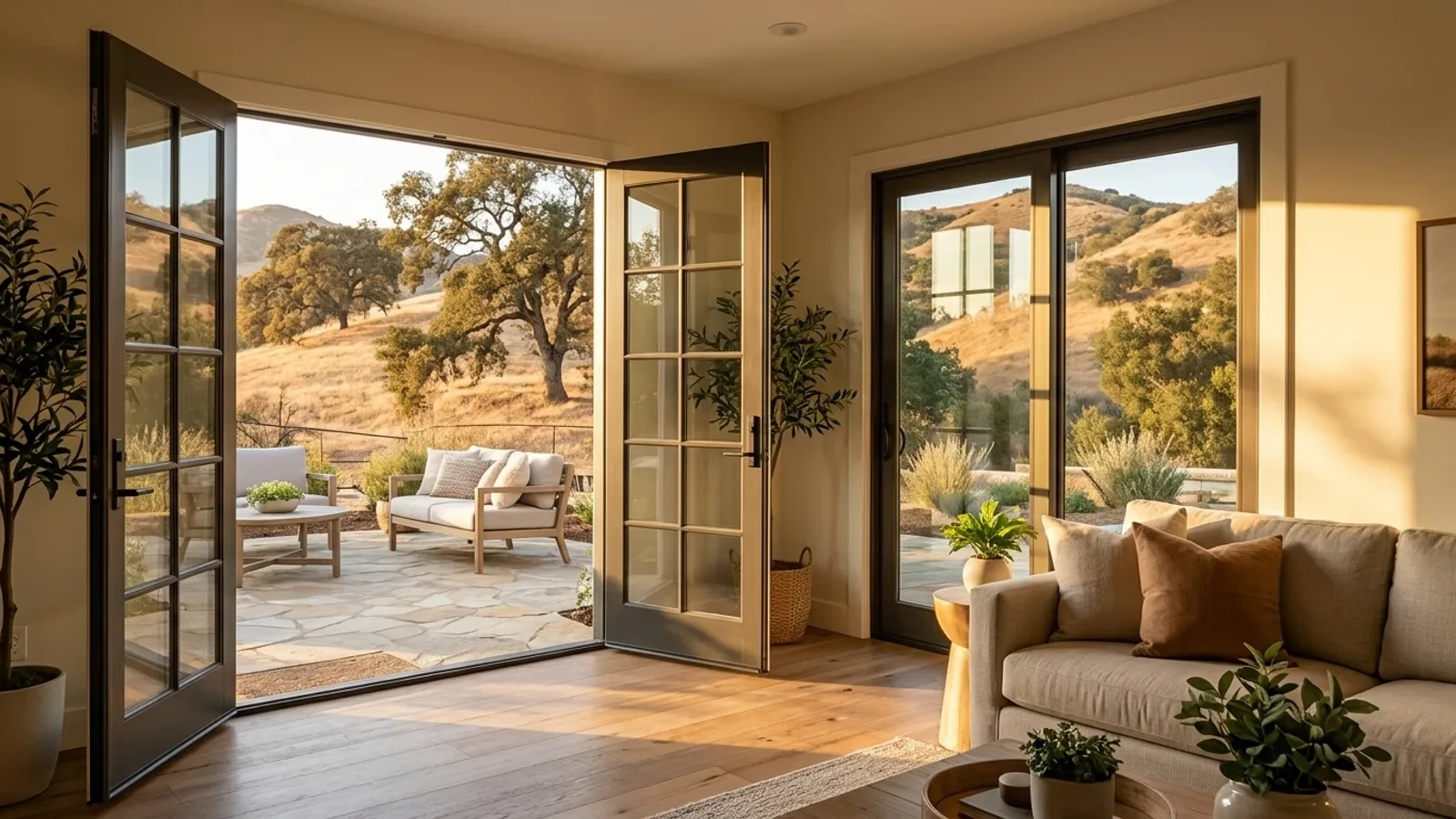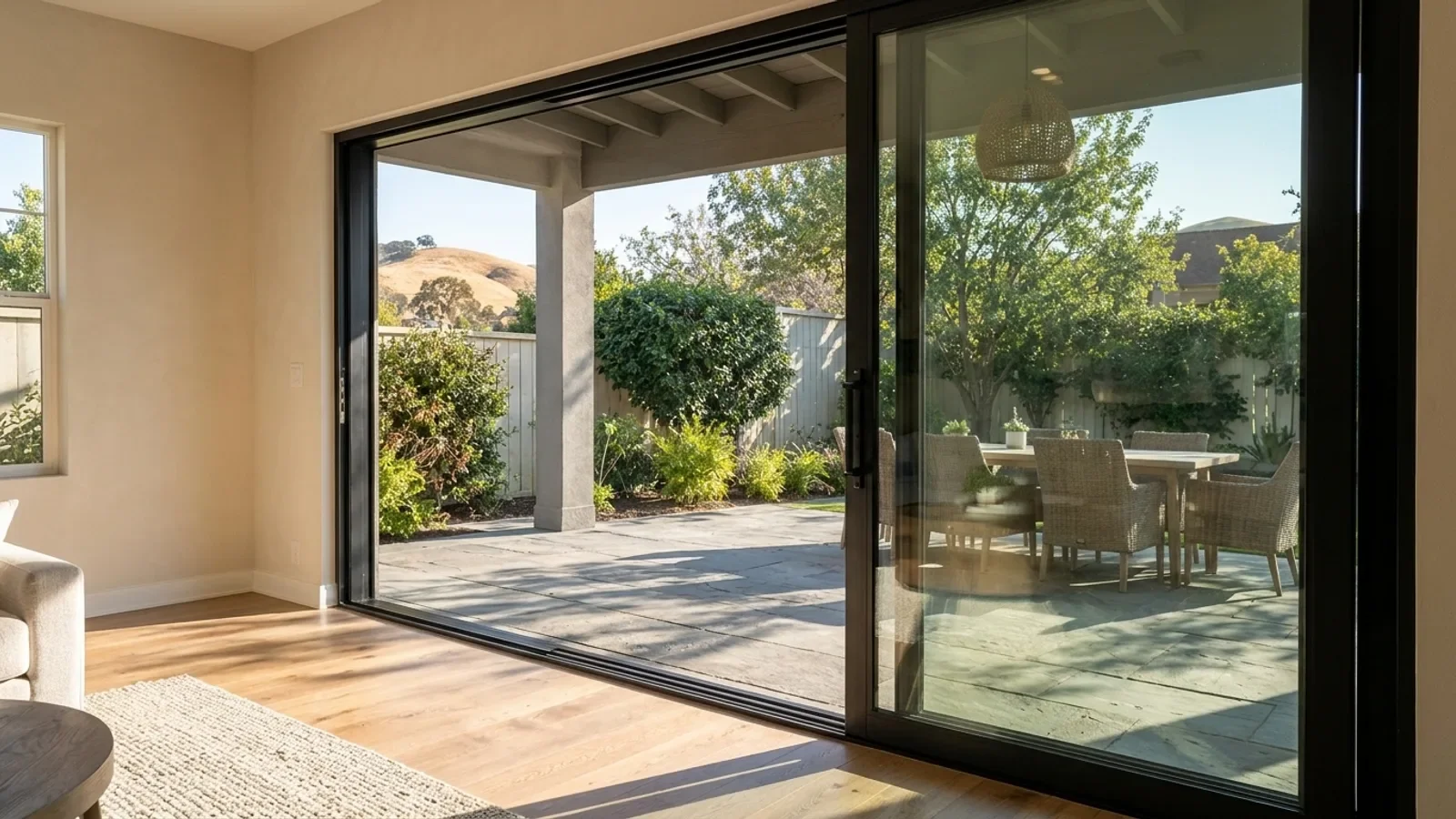

The clearest signs patio door leaks heat thousand oaks homeowners notice are glass that feels hot to the touch on sunny afternoons, a room near the door that stays warmer than the rest of the house, faded floors or furniture, drafts at the edges and frames that warm up fast. Heat usually gets in through the glass and the frame together.
Heat gain is easy to misread. A warm room gets blamed on the air conditioner, the attic or bad luck. Plenty of advice about patio doors comes from colder parts of the country too, where the worry is heat escaping in winter. In Thousand Oaks the bigger issue is often heat coming in. That mix-up keeps a few stubborn myths alive. Here’s what’s actually true.
Reality: Most heat gain through a patio door has nothing to do with drafts. Sunlight passes through the glass and warms whatever it lands on: your floor, your couch, the air in the room. That’s called solar heat gain, which simply means warmth carried in by sunshine. No moving air is needed.
So a door can be sealed tight and still turn a family room into an oven by four o’clock. Drafts matter, but they’re only one piece. The glass itself is usually the bigger piece.
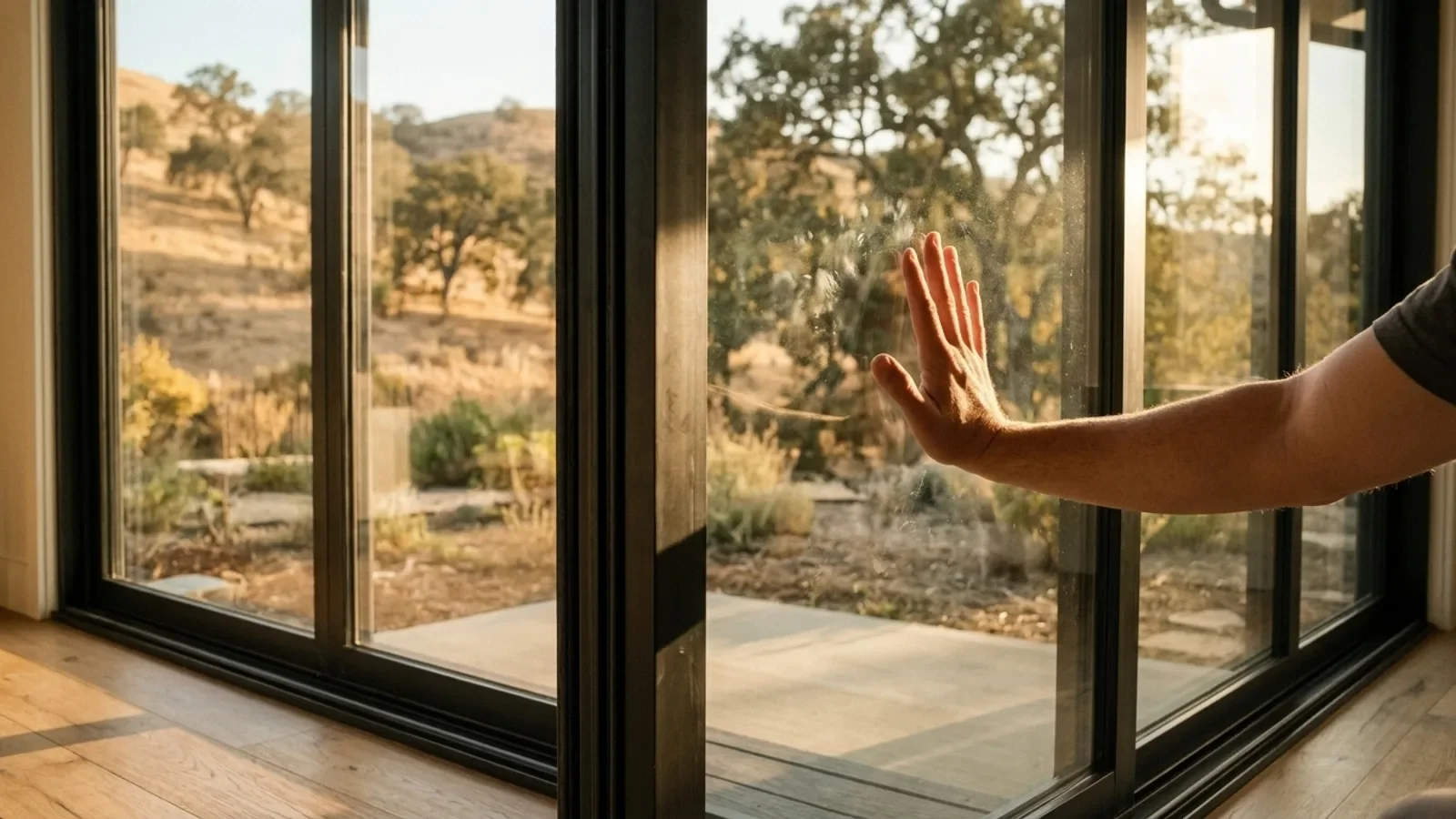
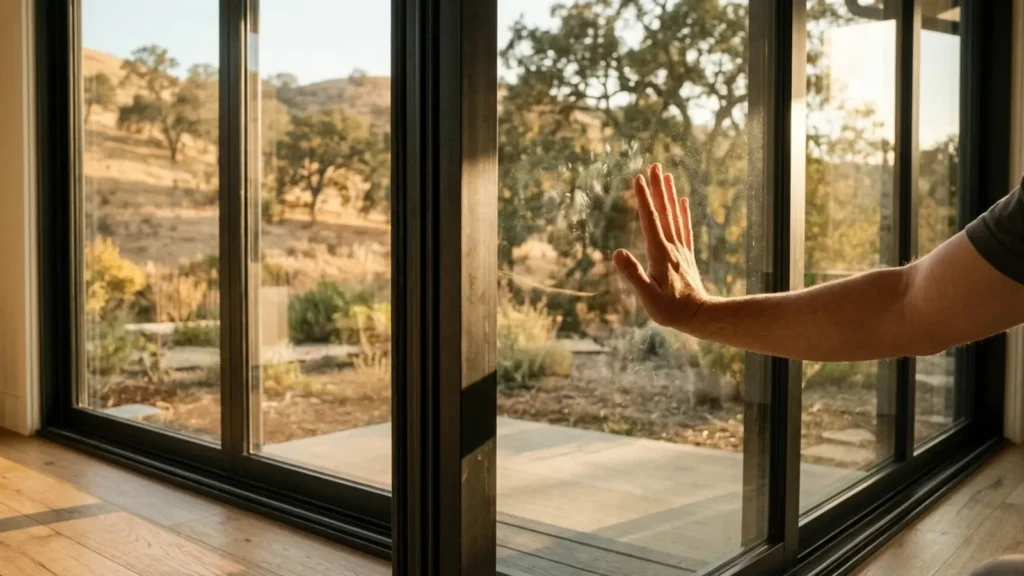
A simple check is worth doing. On a sunny afternoon, put your palm flat on the inside of the glass. If it feels warm or hot, heat is getting through. Then touch an inside wall nearby. A big difference tells you the door is the weak spot.
Reality: Mild on the coast and mild in the Conejo Valley are not the same thing. Thousand Oaks sits inland behind the Santa Monica Mountains, so it misses much of the ocean’s cooling. Summer and early fall afternoons get hot and bright, and Santa Ana wind days can push warm, dry air through any gap in the house.
The local housing stock adds to it. A large share of homes in Thousand Oaks, Newbury Park and Westlake Village were built from the 1960s through the 1980s. Many still have their original sliding doors with single-pane glass or early dual-pane units, set in aluminum frames with no thermal break. A thermal break is a strip of insulating material that separates the inside and outside of a metal frame. Without one, the frame carries outdoor heat straight into the room.
Ranch homes with big rear walls of glass facing a west yard are common here. Those doors take the full force of the late-day sun. Mild winters don’t cancel out hot afternoons. It’s the summer side that usually tells the story.
Reality: Two panes help, but they’re not the whole answer. Older dual-pane units can lose their sealed gas fill over time. Some were made without low-E coatings. Low-E means low-emissivity, a very thin coating on the glass that reflects much of the sun’s heat while still letting light through.
There’s also seal failure. When the seal between the panes breaks, moisture gets in. You’ll see fog, haze or streaks between the panes that you can’t wipe off from either side. That’s a sign the unit isn’t insulating the way it was built to.
Ratings help you compare doors. The ENERGY STAR criteria for windows and doors look at two numbers: U-factor, which shows how easily heat moves through the door, and Solar Heat Gain Coefficient (SHGC), which shows how much sun heat gets in. Lower is better for both in a sunny climate like ours. Older doors often have no label at all. That’s worth checking.
Hold a lighter flame or a small flashlight close to the glass and look at the reflections. Single-pane glass shows one reflection, and dual-pane shows two. A label etched in a corner of the glass can also show the maker and the type.
A slightly warm frame on a hot day is common. A frame that feels hot inside the room, especially bare aluminum, usually means it has no thermal break and is carrying outdoor heat indoors.
It depends more on the glass, frame and seals than on the style itself. Each style has trade-offs in sealing and space, which is why it helps to see how the two compare in a side-by-side look at French and sliding patio doors for Thousand Oaks homes.
Replacement is usually worth weighing when the glass is fogged between panes, the frame is warped or bare aluminum without a thermal break, or the door is hard to slide or latch. Small issues like a worn seal on an otherwise sound door can often be handled with simpler upkeep.
Reality: Window coverings can cut glare and some heat. They can’t stop heat that has already passed through the glass. Once sunlight goes through, it warms the air between the glass and the blind. That warm air drifts into the room.
Closed blinds also defeat the point of a patio door. You bought it for the view and the light. Keeping it covered every afternoon is a sign the door isn’t doing its job.
Coverings are a fine short-term fix. If you rely on them daily from spring through fall, the door itself is likely the issue.
Reality: A patio door can look clean and still let heat in. The trouble often hides in places you don’t study closely. Here’s where to look:
Try the paper test. Close the door on a sheet of paper and pull it out. If it slides out with no grip, the seal there is loose. Do this at several spots. Daylight showing around a closed door is an even plainer clue.
Seals do wear out with sun and use. In most homes, worn weatherstripping is the easiest piece to deal with.
Reality: In Thousand Oaks, warm, sunny days can run well into fall, and Santa Ana conditions often show up from autumn into winter. A low winter sun also shines farther into a room through south-facing glass. That can warm a space nicely on a cool morning. It can also overheat it by afternoon.
The flip side is real too. On chilly winter nights in the valley, a poorly insulated door lets heat out. Cold glass and cold frames near a seating area make the room feel drafty even when the thermostat says otherwise.
So a patio door that struggles in summer usually struggles on cold nights too. It’s the same weakness pointed the other way.
Reality: Style plays a part. Sliding doors seal with brushes or gaskets along tracks, and the panel has to move, so wear in the track shows up over time. French doors close against a frame and press into their seals, which can seal snugly when they’re well adjusted. They also need room to swing open, which matters in tight spaces.
Bifold doors fold back in panels and seal at each joint. Each style can perform well with good glass and a solid frame. Each also has its own wear points.
Space often decides as much as heat. If your patio opens off a narrow dining area, a swing door may not fit. There’s a helpful rundown of patio door choices for snug rooms if that’s your situation. For the full picture of framing and glass between the two most common styles, read how French doors stack up against sliders in the Conejo Valley.
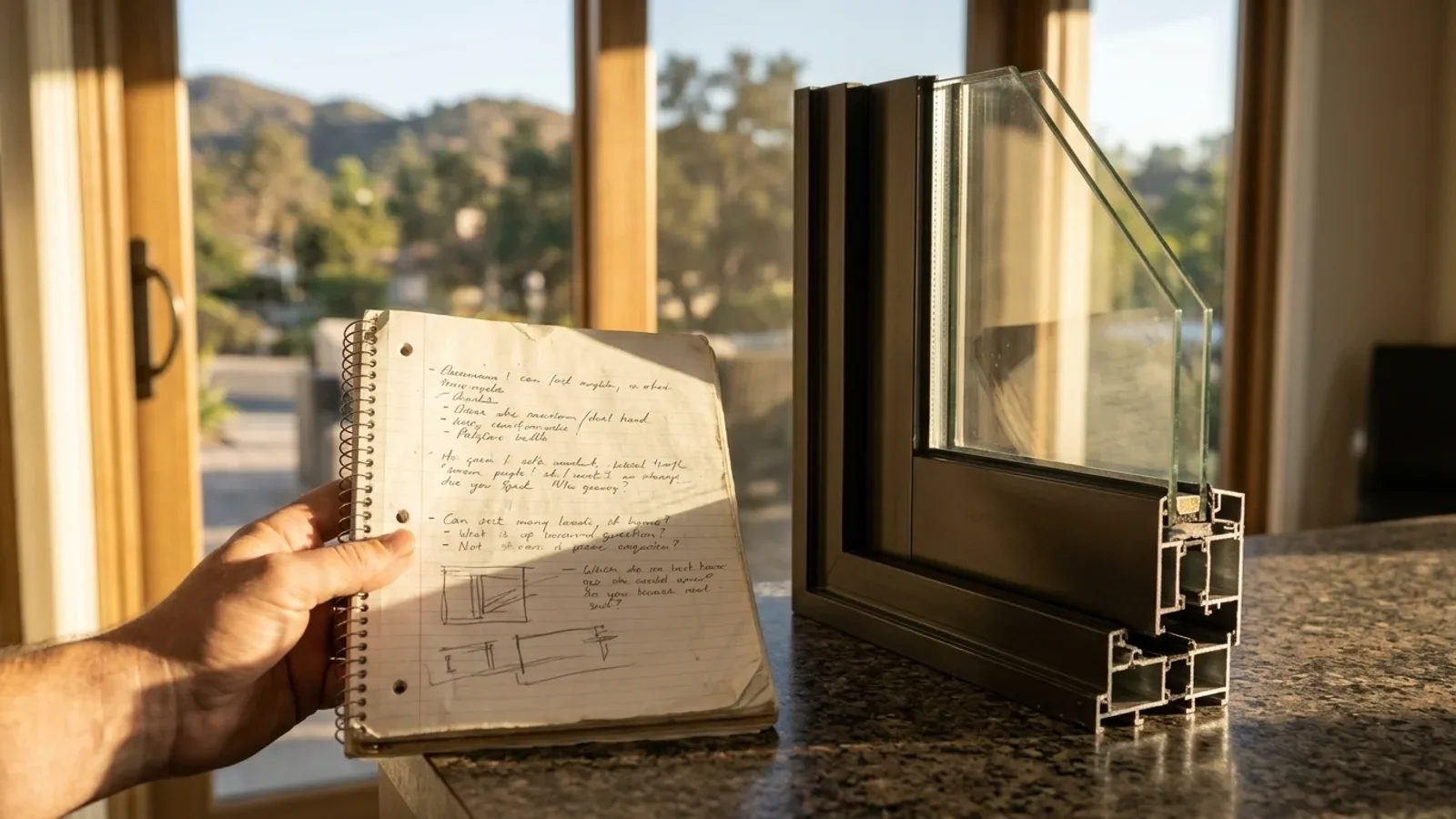
Reality: You can learn a lot on your own, and it makes the conversation easier. Before you shop, note a few simple facts:
Bring those notes along. Then ask about U-factor, SHGC, low-E glass and thermal breaks. A list of questions worth raising with a patio door supplier can help you cover the rest. Good questions lead to a better fit.
If your door is showing several of these signs, the next step is simple: see what a newer door could look like. You can browse French, sliding and bifold patio doors from Eris Home Products and find a style that fits your Thousand Oaks home.
Get expert advice for your project.
Contact us today!