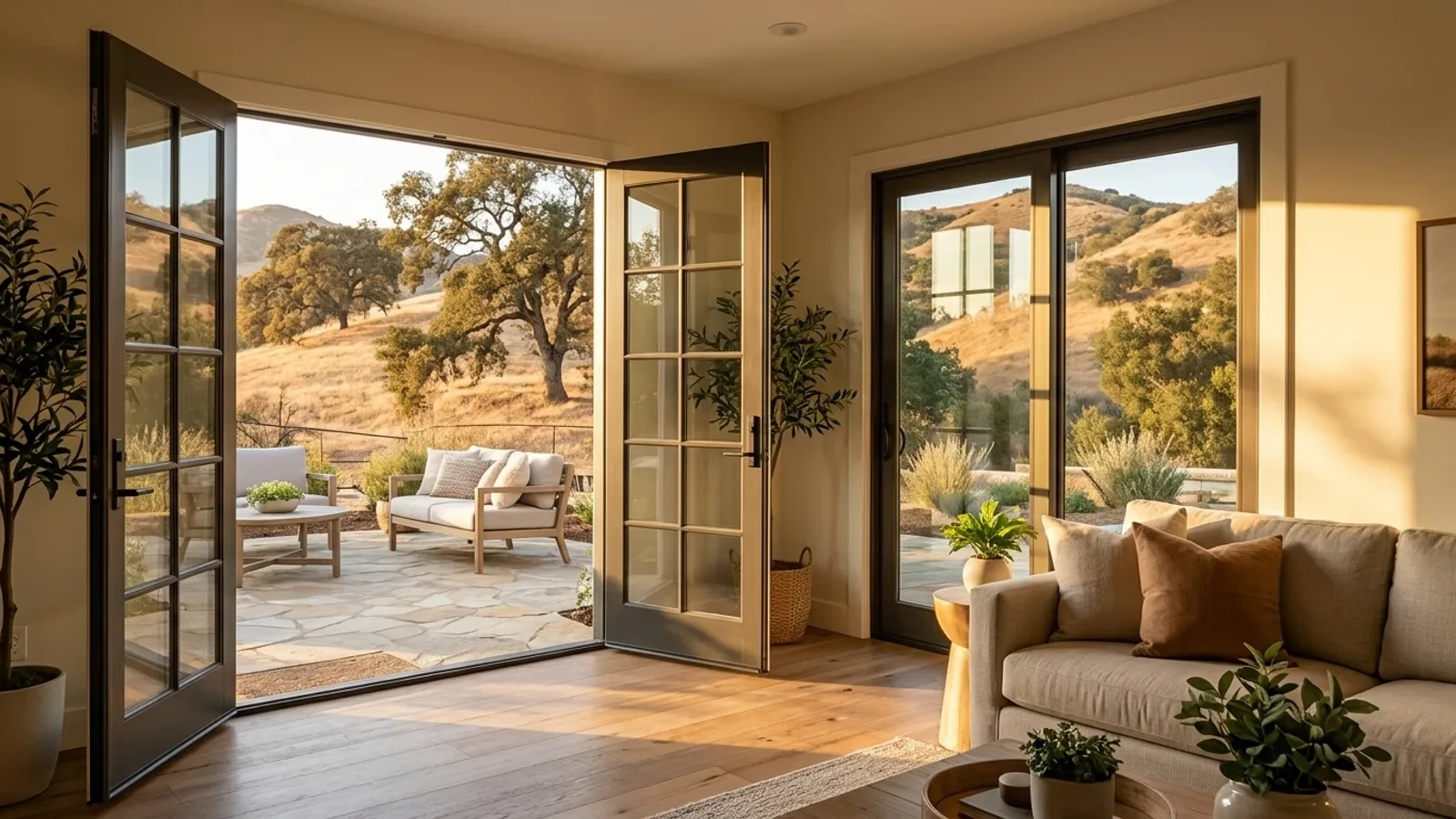

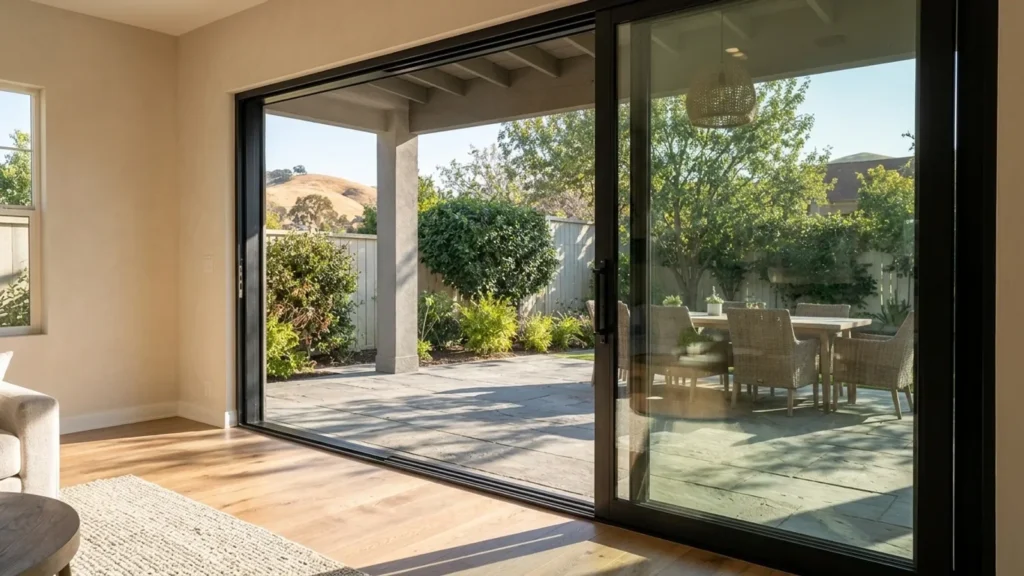
How do metal patio door frames hold up in Conejo Valley summers, and what matters most when choosing aluminum sliding glass doors Thousand Oaks homeowners can count on? There are seven key factors to weigh. The most important is selecting a thermally broken frame that stops outdoor heat from conducting directly into your living room. Understanding how metal reacts to dry heat, intense UV rays, and cool canyon nights makes it simple to pick a setup that glides smoothly for decades.
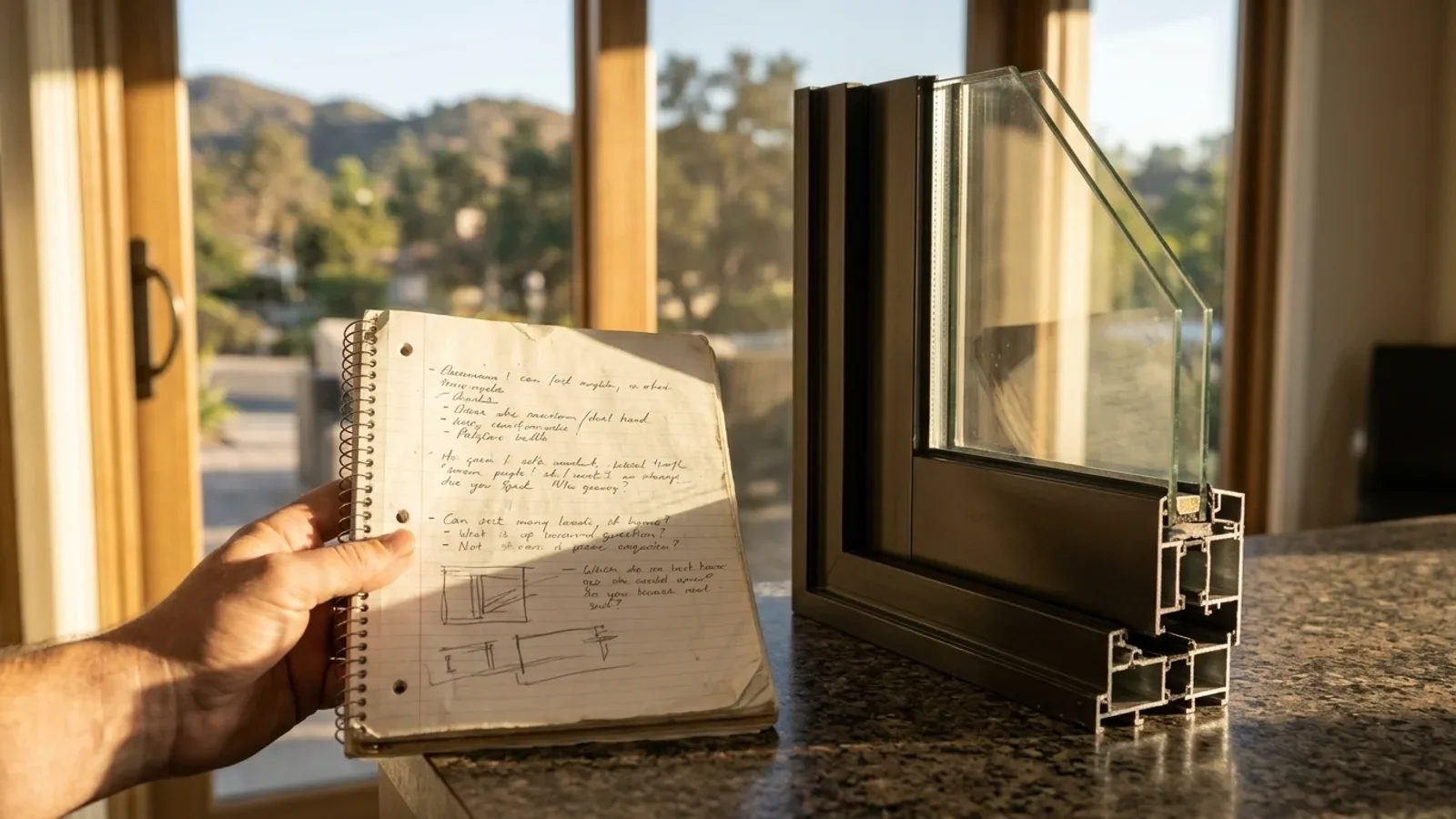
A thermal break is the single most important feature inside modern aluminum sliding glass doors Thousand Oaks homeowners install for year-round comfort. Standard solid aluminum is a natural conductor. That means it moves heat fast. When afternoon sun bakes a patio off Lynn Road or up in Newbury Park, an uninsulated metal frame pulls that heat right through the wall. Then it radiates inside your house.
A thermally broken frame fixes this problem. Manufacturers split the interior and exterior aluminum profiles into two separate pieces and join them with a rigid, low-conductivity barrier, usually a reinforced polyamide strip. This hidden plastic bridge stops heat transfer in its tracks. It also keeps the inner metal frame closer to your indoor room temperature during chilly winter mornings.
When you compare options for sliding glass patio doors in Thousand Oaks, checking for a continuous thermal break in both the outer frame and the moving panels is worth putting at the top of your checklist. Without it, even the highest-grade glass package will struggle to keep your cooling bills steady during a late-summer heatwave.
Aluminum has a much higher strength-to-weight ratio than vinyl or wood, so the frame profiles can be built significantly thinner while still holding heavy insulated glass. In the door trade, the visible width of the frame and panel edges is called the sightline. Narrow sightlines mean less bulky framing blocking your backyard view. More natural daylight reaches deep into your kitchen or family room.
That structural rigidity pays off when you want oversized panels. Double-pane and triple-pane tempered glass panels are remarkably heavy. Softer frame materials need thick, chunky walls or internal steel inserts just to keep from bowing under the weight. Extruded aluminum holds those wide spans straight and true on its own. It will not droop at the center rail over time.
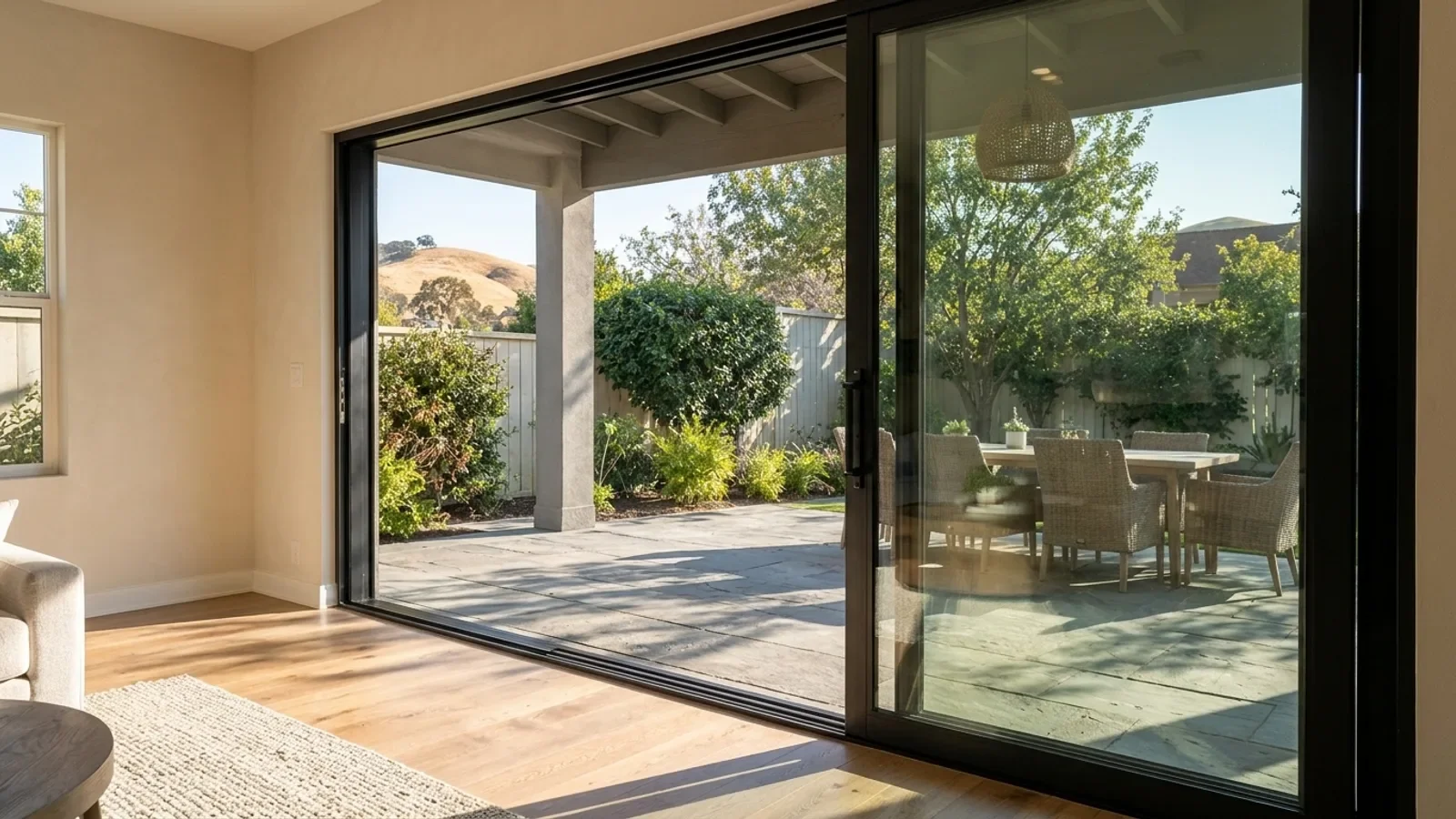
If you are weighing wide multi-panel sliders against comparing sliding and bifold patio door layouts for a wide patio opening, aluminum gives both styles a clean, contemporary edge. You get glass almost from floor to ceiling without sacrificing structural backbone.
Aluminum resists thermal expansion and sun warping far better than standard uPVC vinyl on hot, west-facing walls. Anyone who has watched the afternoon sun hit the back of a home in Westlake Village or Dos Vientos knows how hot exterior surfaces get between July and October. Dark or direct-sun surfaces can easily reach temperatures way above the daily air reading.
Vinyl frames expand and contract at a noticeably higher rate than aluminum when temperatures swing from a 98-degree afternoon to a 55-degree night. Over many seasons, that constant stretching and shrinking can cause softer frames to bow slightly, bind in the track, or pull at the perimeter caulk seal. Dark finishes make this worse. A dark bronze or black frame finish absorbs far more solar heat than white.
Aluminum expands very little under the exact same heat load. Its rigid molecular structure stays stable even when finished in matte black or dark charcoal and exposed to direct afternoon glare. The panels stay square. The weatherstripping maintains even contact, and the lock latch lines up with the strike plate on a scorching August afternoon just as easily as it does on a cool November morning.
Factory-applied architectural coatings on aluminum frames prevent the chalking, fading, and brittleness that constant Southern California ultraviolet light causes on lesser surfaces. At our elevation in the Conejo Valley, clear skies mean year-round UV exposure. Painted wood needs scraping and recoating every few years, and lower-grade plastics can yellow or turn chalky after years of baking.
Quality aluminum patio doors usually come with one of two finishes: powder coating or anodizing. Powder coating sprays dry pigment particles electrostatically onto the metal and bakes them in an oven until they cure into a hard, uniform skin. Architectural-grade powder coats (often tested to AAMA specification standards for exterior coatings) hold their color and gloss under harsh sunlight. Anodizing is an electrochemical process that actually thickens the natural oxide layer on the surface of the aluminum itself. It cannot peel or flake off.
Maintenance stays simple. Washing the exterior frame twice a year with mild dish soap and a soft sponge removes dust and ash kicked up by Santa Ana winds. That simple rinse is usually all it takes to keep the finish looking crisp.
Even a thermally broken aluminum frame needs a matched Low-E insulated glass unit to meet California energy rules and block radiant heat. The frame only makes up a small percentage of your patio door’s total surface area. The glass makes up the rest. When you replace or install exterior doors in California, the whole assembly has to satisfy California Title 24 Building Energy Efficiency Standards for two specific numbers: U-factor and Solar Heat Gain Coefficient (SHGC).
Here is what those two terms mean in plain English. U-factor measures how well the entire door keeps non-solar heat from escaping or entering (lower numbers insulate better). SHGC measures how much solar radiation passes through the glass to warm up your floors and furniture (lower numbers block more sun heat). Requirements vary by climate zone and project scope. Always check local building codes or consult a licensed pro before ordering.
Pairing a thermally broken aluminum frame with dual-pane, argon-filled glass coated with a spectrally selective Low-E layer gives you the best of both worlds. Visible daylight still pours in. Invisible infrared heat bounces right back outside toward the patio.
Thousand Oaks homes sit in a unique transition zone where coastal breezes meet dry inland valley heat, creating temperature and wind shifts that test patio door hardware and seals. Neighborhoods near the top of the Conejo Grade or backing up to open space in Lang Ranch and Wildwood face strong, dry Santa Ana wind gusts every autumn and winter. Those gusts drive fine grit, oak pollen, and dry dust straight against exterior door thresholds.
A well-built aluminum sliding system counters this local climate with heavy-duty sill tracks and multi-fin brush or compression weatherstripping. Because extruded aluminum can be milled to very tight tolerances, the interlock where the two sliding panels meet in the middle fits together snugly. Latch the door shut. That interlocking metal joint resists wind rattle and keeps fine valley dust from blowing into the house.
Many older ranch and Mediterranean-style tract homes across Thousand Oaks still have original hollow aluminum sliders from the 1970s or 1980s. Those vintage frames lacked thermal breaks, ran on single-wheel steel rollers that flat-spotted over time, and held thin single-pane glass. Upgrading to a modern thermally broken aluminum system keeps the slim, clean look that fits mid-century and contemporary Conejo Valley architecture. It also completely changes how quiet and draft-free the room feels.
Modern aluminum sliding patio doors carry thick, insulated glass that requires corrosion-resistant tandem rollers and durable track caps to glide with one finger. When you combine a rigid aluminum sash with double-pane tempered safety glass, a single wide door panel can easily weigh well over a hundred pounds. Cheap nylon wheels or light-gauge axles will flatten out under that load. You end up tugging and lifting the handle just to get the door open.
Look for sliding panels riding on dual-wheel (tandem) stainless steel ball-bearing rollers. Stainless steel resists pitting from pool moisture or damp winter mornings, and sealed bearings keep patio grit from grinding inside the axle. Most quality aluminum sills also feature a raised stainless steel track cap directly under the wheels. The rollers never wear a groove into the painted aluminum threshold itself.
To see how track layouts, panel configurations, and ventilation screen setups work together across different backyards, check our complete guide to choosing sliding glass patio doors for Thousand Oaks homes. Keeping that bottom track vacuumed out once a month will help those stainless rollers carry heavy thermal glass smoothly for years.
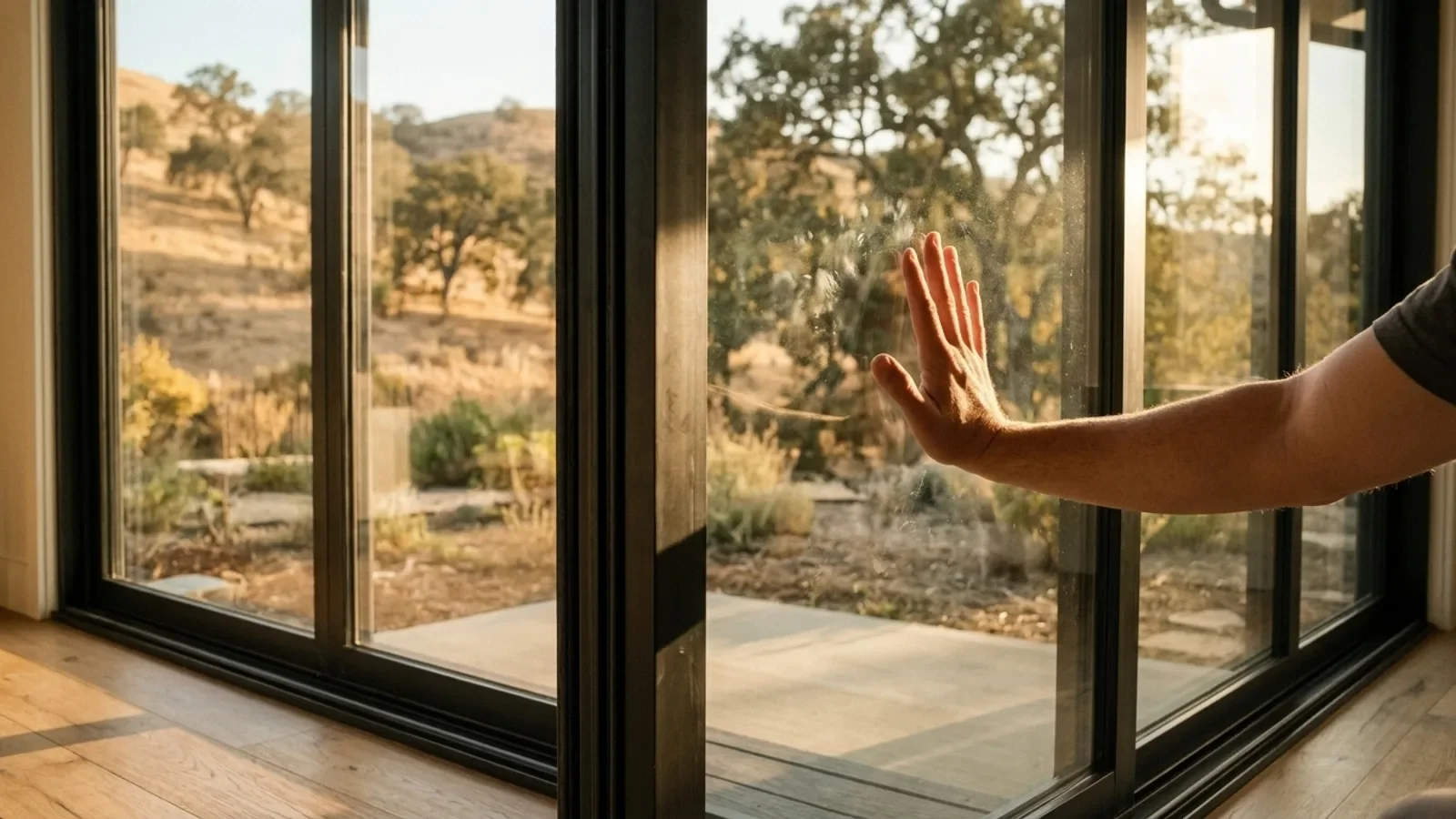
Exterior aluminum frames facing direct afternoon sun will feel warm to the touch on a 95-degree day, especially if finished in black or dark bronze. Inside the house, a thermally broken frame stops that exterior heat from crossing over. The interior metal rail stays comfortable and safe to touch.
Modern heavy-wall aluminum sliders with interlocking meeting rails and dual-pane laminated or tempered glass are remarkably quiet during windy weather. Rattling is almost always a sign of a worn-out vintage single-pane slider whose weatherstripping has flattened out or whose rollers have dropped out of adjustment.
Vacuum loose dirt, leaves, and pet hair out of the bottom sill track every few weeks using a crevice tool, then wipe the rail down with a damp cloth. Avoid spraying greasy oil lubricants into the track. Wet grease traps airborne Conejo Valley dust and turns it into an abrasive paste that slows the rollers down.
If you are ready to compare frame profiles, thermal glass packages, and panel layouts for your patio opening, explore the sliding patio doors and custom bifold doors available through Eris Home Products in Thousand Oaks to find a durable fit for your home.
Get expert advice for your project.
Contact us today!