
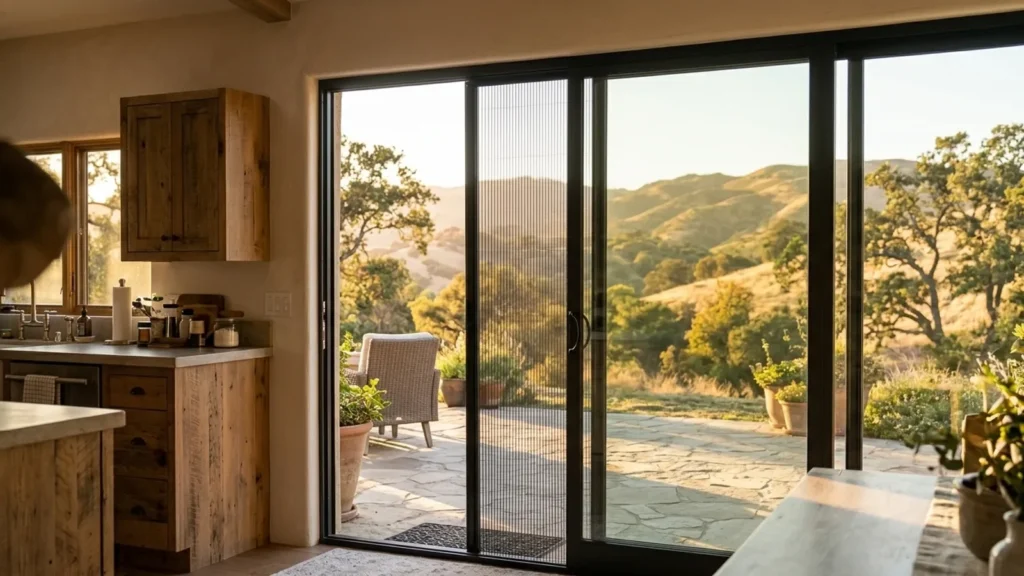
To plan sliding glass patio doors thousand oaks homes will use well, measure the opening, pick a panel layout that fits your furniture and traffic, and decide where air and screens should go. Picture the late-afternoon breeze off the hills reaching the kitchen while you cook. That breeze is what a good plan delivers.
A little prep makes every later choice easier. Gather these first:
Rough numbers are fine at this stage. A professional confirms exact sizes later.
Start by taking rough width and height measurements of your existing opening or the wall where a door might go. Measure in a few spots, since older openings are not always square. Then note what sits beside it: light switches, outlets, cabinets, a fireplace, or a wall that turns a corner. Sliding panels need wall space to park against. Write all of it down.
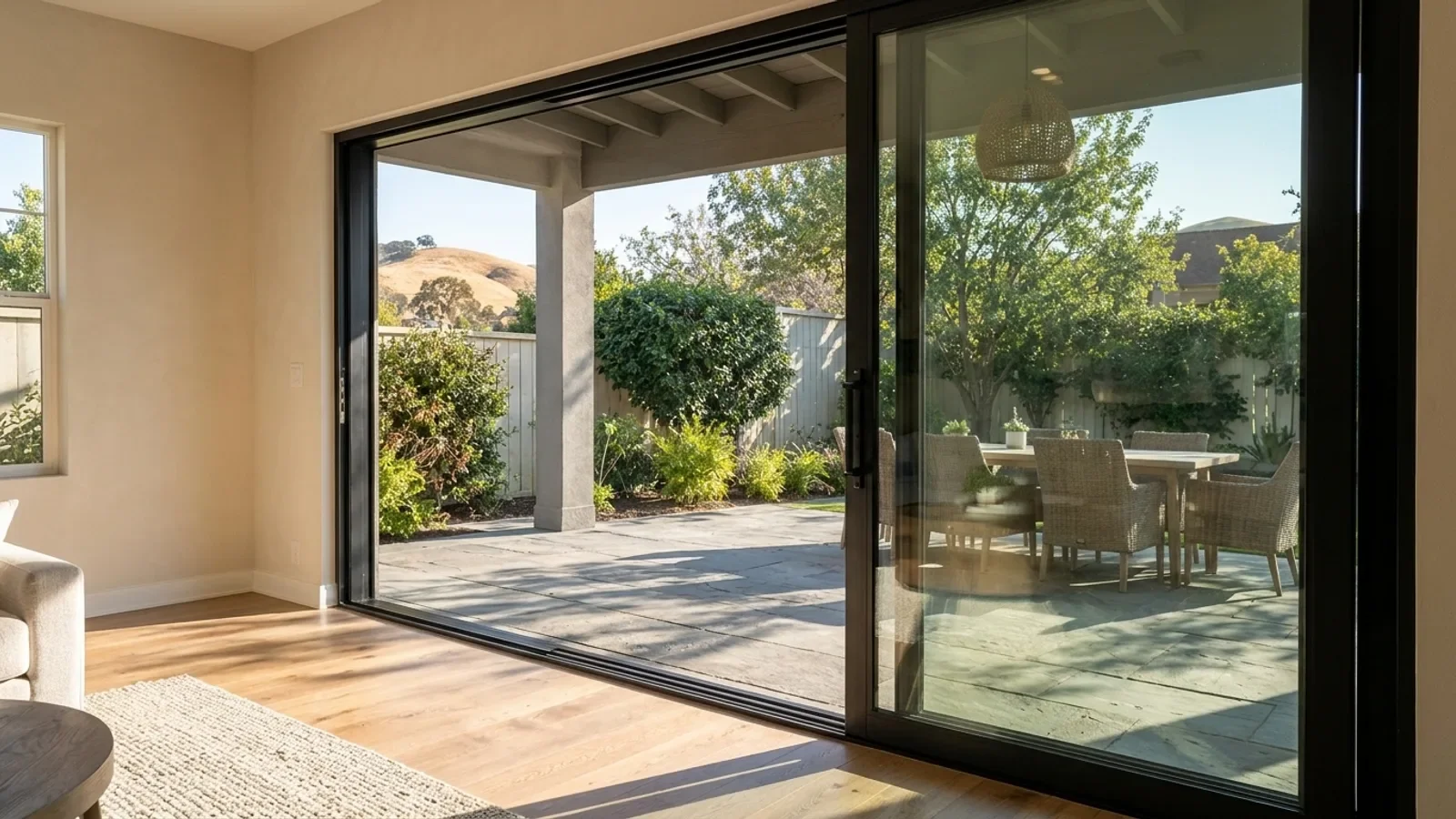
Pick the layout by how you want to walk through the opening. A sliding door is a set of glass panels in one frame, where some panels move and some stay fixed. The common sliding patio door layout options look like this:
Think about which side should open. If your grill and patio table sit to the left outside, a left-opening slider usually makes more sense. Small choice. Big daily difference.
Check clearance next, because this is where sliders shine. A sliding panel moves along a track instead of swinging, so it needs no floor space to open. That is why sliders are a practical pick when the dining table or sofa sits close to the patio. Still, plan for these:
If you want the full wall to open instead, compare the two styles in this look at sliding versus bifold doors. Bifolds fold away completely. Sliders keep some glass in place.
Plan ventilation by thinking about the whole house, not just the door. Air moves best when it has an inlet and an outlet. A slider on one side of the home paired with a window or door on the opposite side lets a breeze cross the room. This is called cross-ventilation, and it is simple physics. Patio door ventilation in the Conejo Valley works best when you place the operable panel toward the prevailing breeze. Fixed glass lets in light but no air. So decide which panel slides with airflow in mind.
Choose a screen once you know which panel opens. A screen is a mesh panel that lets air in while keeping bugs and leaves out. The main screen options for sliding patio doors are:
Ask how the screen fits the door’s track before you commit. Not every screen works with every frame. Worth checking early.
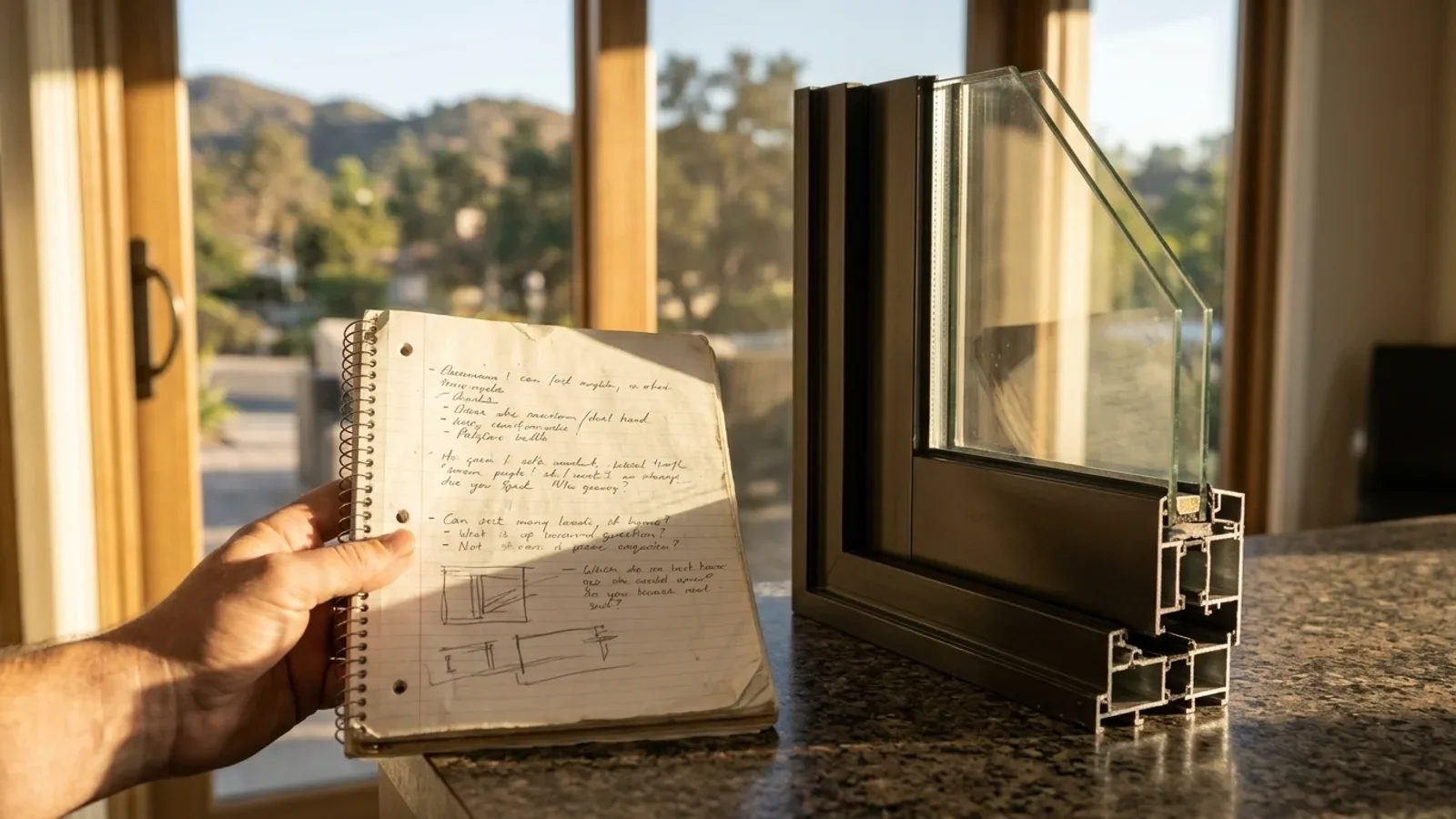
Settle on a frame material by weighing looks, upkeep and how wide your panels are. Aluminum frames are slim and strong, which suits large glass panels and a modern look. Vinyl frames are another common choice in many homes. For a side-by-side view, read how aluminum and vinyl sliders compare. For glass, ask about insulated options. Insulated glass means two panes with a sealed space between them, which can help reduce heat moving through the door. In a sunny room, that matters.
Look at the threshold, the strip at the bottom of the door that the panels ride on. A lower threshold makes it easier to roll a cart, step out with a tray, or let a toddler wander through. A taller one can do a better job shedding water. Talk through which matters more for your patio. Also think about locks and handle height for everyone in the house.
Finish by sharing your sketch, measurements and photos with someone who supplies sliding patio doors. They can confirm sizes, point out structural questions, and match a layout and screen to your goals. Removing or widening an opening can affect the wall that holds up the house. Leave that to a licensed pro. Permit requirements vary by area, so check with the City of Thousand Oaks or your contractor before any wall changes.
Local conditions shape a good plan here. Thousand Oaks sits inland in the Conejo Valley, so summers run warm and dry while evenings often cool off. That pattern rewards a door you can open after sunset to pull cooler air through the house. Many neighborhoods were built out in the 1960s through the 1980s, and plenty of those ranch and split-level homes still have their original narrow sliders. Replacing one is often a chance to rethink layout and screens. Dry Santa Ana wind days also carry dust and debris, so a screen you can close fast is handy. The area sits in a high fire-risk region too, and some lots fall under extra building rules. Requirements vary, so check your local codes. Late fall, with milder days, is a comfortable time to plan before spring patio season.
A clear plan keeps the choices simple. You know your opening, your layout, your airflow and your screen. Those four answers narrow the field fast. When you’re ready to see options in person, see our sliding patio door selection and bring your notes along. Eris Home Products supplies sliding patio doors alongside bifold, French and single patio doors, so you can compare styles in one place.
Yes, usually. Because the panel slides along a track instead of swinging, it needs no floor space to open, which keeps furniture close to the glass.
The side closest to where you walk outside most often. Match it to your patio table, grill or garden path, and to the direction of your usual breeze.
Often, yes, but it depends on the frame and track. A door supplier can tell you which screen styles fit your current door.
Larger panels weigh more, but good rollers and track design help them glide. Ask about the hardware when you compare doors.
Ready for the next step? Talk with us about a sliding patio door for your home and bring your measurements and photos.
Get expert advice for your project.
Contact us today!